Lactic Acid for Keratosis Pilaris: Can It Get Rid of Chicken Skin?
Waleed
02 Oct 2026

Keratosis pilaris — the small, rough bumps often called "chicken skin" — is one of the few skin concerns where lactic acid has been tested in an actual clinical trial. Here's exactly what the research found and what it means for treating it.
 Official
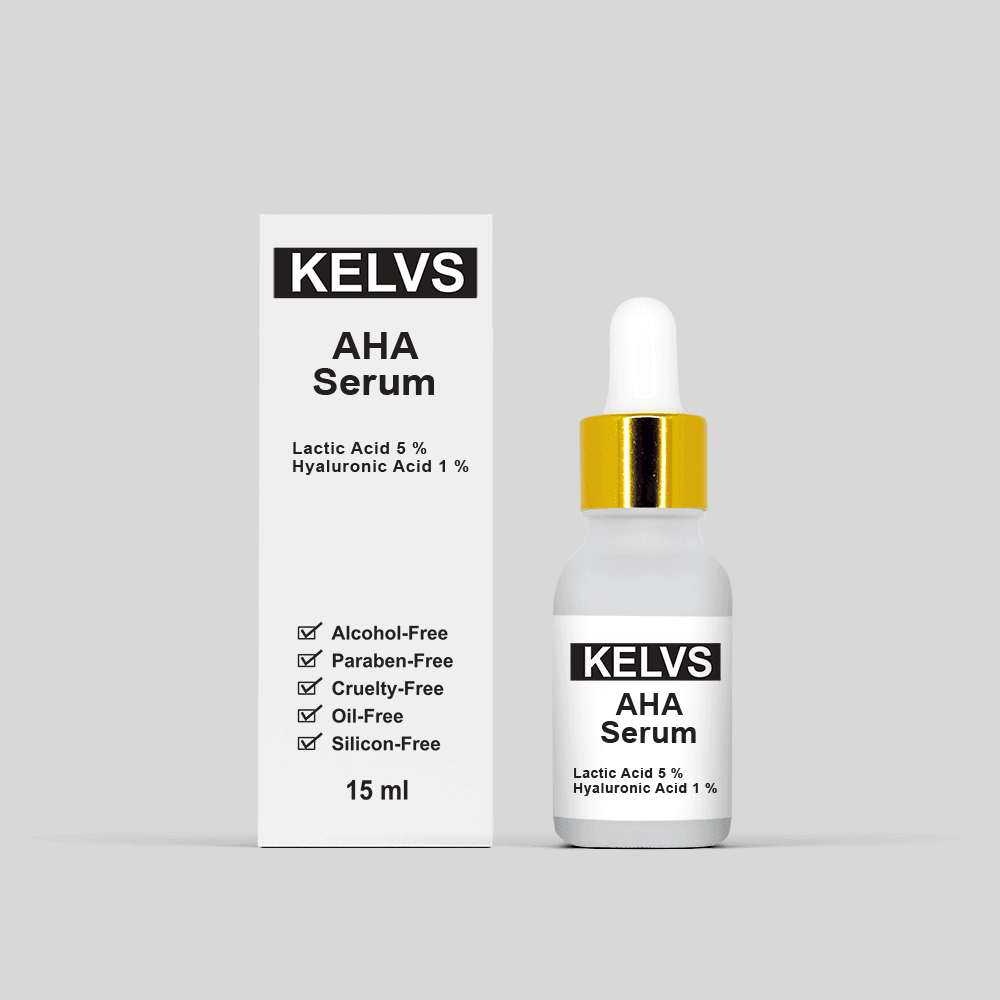
KELVS AHA Lactic Acid 5% Serum | Smooth Skin Texture & Even Tone
Scientifically formulated for maximum efficacy with zero harsh irritants. Restores skin balance, clears pores, and accelerates visible recovery.
Introduction
Keratosis pilaris — the small, rough, often reddish bumps that show up on the backs of the arms, thighs, or cheeks, commonly called "chicken skin" — is one of the most common skin concerns nobody talks about directly. It's not dangerous, it's not acne, and it's often dismissed as something you just have to live with. Lactic acid gets recommended for it constantly, but this is actually one of the few areas in skincare where there's real, specific, head-to-head clinical research behind that recommendation, rather than just repeated internet advice.
The short answer: yes, lactic acid has genuine, trial-tested evidence behind it for keratosis pilaris — in one randomized study, it actually outperformed salicylic acid, a BHA that's also commonly recommended for the same condition. It won't permanently cure KP, because KP is a chronic condition that tends to return once treatment stops, but it is one of the better-supported options for managing it. Here's what the research actually showed.
What Keratosis Pilaris Actually Is
Keratosis pilaris happens when keratin — the protein that makes up the outer layer of skin — builds up and plugs individual hair follicles instead of shedding normally. Each plugged follicle shows up as a small, rough bump, sometimes with a bit of surrounding redness. It's extremely common, affecting a large share of the population to some degree, and tends to be worse in dry weather and on skin that's already prone to dryness — which is part of why it often gets worse during Pakistan's dry winter months in Punjab and KPK, even though it can show up year-round.
It's also, importantly, a chronic condition. It doesn't have a one-time cure, and most treatments — lactic acid included — are about ongoing management rather than permanent removal.
The Actual Clinical Trial: Lactic Acid vs Salicylic Acid, Head-to-Head
This is the part most articles on this topic skip over, and it's worth knowing about directly rather than taking on faith. A randomized clinical trial conducted at the Institute of Dermatology in Bangkok enrolled 50 patients with confirmed keratosis pilaris and split them into two groups: one applying 10% lactic acid cream twice daily, the other applying 5% salicylic acid cream twice daily, for 12 weeks (published in full on PubMed Central).
By the end of the trial, the lactic acid group saw a 66% reduction in follicular bumps, compared to a 52% reduction in the salicylic acid group. The study also measured skin hydration directly using instrumental skin conductance readings, and found meaningful improvement in both groups — with the improvement from lactic acid specifically linked to better moisture retention in the outer skin layer, not just surface exfoliation. Side effects in both groups were limited to mild, localised irritation, with no serious adverse effects reported.
This result is also reflected in how dermatologists actually practice. A survey of board-certified dermatologists published in the Journal of Drugs in Dermatology found that topical lactic acid is the single most commonly chosen first-line treatment for keratosis pilaris among dermatologists, used by over 43% of respondents — more than any other option, including salicylic acid, urea cream, or plain moisturisers.
Why Lactic Acid Specifically Works for This Condition
Keratosis pilaris is fundamentally a problem of the skin's own shedding process going wrong at the follicle — dead cells aren't releasing properly and build up into a visible plug. Lactic acid addresses this through the same core mechanism it uses everywhere else: loosening the bonds between those built-up cells so they shed more normally.
What makes it a particularly good match for KP specifically, compared to other exfoliating acids, is its added hydration effect. Because lactic acid is chemically related to a compound the skin already uses to retain its own moisture, it doesn't just clear the plug — it also supports the skin's water content at the same time, which matters because KP tends to be worse on dry skin in the first place. That dual action is exactly what the clinical trial measured and found improved.
For more on how this compares with salicylic acid across other skin concerns beyond KP — oiliness, acne, texture — see Lactic Acid vs Salicylic Acid: Which One Should You Use?.
What This Means in Practice: Set the Right Expectation
It's worth being direct about what "66% reduction" actually means versus what it doesn't. It means meaningful, measurable, visible improvement over a 12-week period of consistent twice-daily use — not a complete disappearance, and not a permanent fix. Dermatology literature on KP consistently describes it as a condition that can be recalcitrant and tends to return once active treatment stops, which lines up with it being a chronic, genetically influenced condition rather than something caused by a temporary external factor.
The realistic framing: lactic acid, used consistently, is one of the better-supported ways to keep keratosis pilaris visibly reduced — not a one-time treatment you use for a few weeks and never need again.
A Note on Concentration: Body Skin vs Facial Skin
The clinical trial above used a 10% lactic acid cream, applied to body skin — arms and thighs, where KP most commonly appears. Body skin generally tolerates higher acid concentrations than facial skin, partly because it has a thicker outer layer and partly because it isn't usually layered with as many other active ingredients at once.
This is worth keeping in mind when choosing a product. A lactic acid serum formulated for facial use — including KELVS AHA Serum, at 5% lactic acid with added hyaluronic acid — is built for the face, where a gentler concentration matters more given thinner skin and the presence of other routine steps. It can still be applied to KP-affected areas like the upper arms with good results, particularly given the added hyaluronic acid supporting the same hydration mechanism the clinical trial measured, but for more stubborn or widespread KP on the body, a dedicated higher-concentration lactic acid or ammonium lactate body lotion — applied consistently, twice daily — more closely matches what was actually used in the research.
How to Use Lactic Acid for Keratosis Pilaris
- Apply to clean, dry skin, twice daily, directly on the affected area — this matches the frequency used in the clinical trial
- Follow with a moisturiser to support the skin barrier, particularly important since KP tends to worsen on dry skin
- Give it the full 12 weeks before judging results — the clinical improvement was measured at that point, not sooner
- Expect to continue use long-term for maintenance, since KP tends to return once treatment is stopped
- If using on the face as well as the body, introduce gradually and don't assume a facial-strength serum will behave identically on thicker arm or thigh skin
- Sunscreen on any treated area that's exposed to the sun, since exfoliating acids increase UV sensitivity
For general guidance on building lactic acid into a routine correctly — order of application, starting frequency, what not to combine it with early on — see How to Use Lactic Acid in Your Skincare Routine.
Official
KELVS AHA Lactic Acid 5% Serum | Smooth Skin Texture & Even Tone
Scientifically formulated for maximum efficacy with zero harsh irritants. Restores skin balance, clears pores, and accelerates visible recovery.
Conclusion
Keratosis pilaris is one of the rare cases in skincare where the recommendation to use lactic acid isn't just repeated advice — it's backed by an actual randomized trial that measured real improvement and directly compared it against another commonly recommended acid. A 66% reduction in bumps over 12 weeks, with meaningfully better results than salicylic acid in the same study, is a genuinely strong result. What it isn't is a permanent fix — KP is a chronic condition, and lactic acid's role is sustained management rather than a one-time cure. Used consistently, twice daily, for the long haul, it's one of the better-evidenced tools available for keeping it under control.