Lactic Acid vs Salicylic Acid: Which One Should You Use? (Pakistan Skincare Guide)
Waleed
27 Aug 2026

Lactic acid and salicylic acid are both exfoliating acids, but they solve different problems, This guide explains the real difference and gives a clear recommendation based on your actual skin concern.
Buy Our BHA Serum (Salicylic Acid)
Introduction
Most people trying to build a skincare routine reach a point where they know exfoliating acids can help — smoother texture, fewer breakouts, a more even tone — but are not sure which acid actually matches their skin. Lactic acid and salicylic acid are the two names that come up most often, and they get used almost interchangeably in casual advice. They should not be.
The short answer: lactic acid is an AHA (alpha hydroxy acid) that is water-soluble and works mainly on the surface of the skin, smoothing texture and improving dullness. Salicylic acid is a BHA (beta hydroxy acid) that is oil-soluble and can travel inside the pore, making it more directly useful for blackheads, whiteheads, and oil-related congestion. Neither is universally "better" — the right one depends on whether your main concern lives on the surface of your skin or inside your pores.
This guide walks through what each acid actually does, compares them directly, and ends with a clear, practical recommendation for oily, dry, acne-prone, and sensitive skin — including whether you can use both.
What Is Lactic Acid?
Buy Our AHA Serum (Lactic Acid 5%)
Lactic acid belongs to the alpha hydroxy acid (AHA) family, a group of water-soluble acids that work by loosening the bonds between dead skin cells sitting on the surface of the skin. As those bonds weaken, dead cells shed faster than they would on their own, revealing smoother, more evenly toned skin underneath.
Among the AHAs, lactic acid is generally considered one of the gentler options. Its molecule is larger than glycolic acid's, which means it penetrates more slowly and more shallowly — producing a milder exfoliating effect with a somewhat lower irritation risk at comparable concentrations. It is also chemically related to a component of the skin's own natural moisturising factor, which is why it is frequently recommended for dry or rough-looking skin: it exfoliates while also supporting the skin's ability to hold onto moisture.
That said, "gentler" does not mean "risk-free." Any exfoliating acid, including lactic acid, can cause irritation, redness, or peeling if used too frequently, at too high a concentration, or on skin that is already compromised.
What Is Salicylic Acid?
Salicylic acid belongs to the beta hydroxy acid (BHA) family. The defining difference from AHAs is solubility: salicylic acid is oil-soluble rather than water-soluble, which allows it to move into the sebum-filled environment inside a hair follicle rather than remaining on the surface.
This is the mechanism behind why salicylic acid is so commonly recommended for oily and acne-prone skin. Once inside the pore, it helps break down the mixture of oil, dead cells, and debris that forms blackheads and whiteheads, addressing congestion closer to its source rather than only smoothing what is visible above the skin. Salicylic acid also has a mild anti-inflammatory action within the follicle, which is part of why it is often used specifically for inflammatory, acne-prone skin rather than purely for texture.
Lactic Acid vs Salicylic Acid: The Key Difference
| Category | Lactic Acid (AHA) | Salicylic Acid (BHA) |
|---|---|---|
| Acid type | Alpha hydroxy acid | Beta hydroxy acid |
| Water or oil solubility | Water-soluble | Oil-soluble |
| Where it mainly works | Surface of the skin (stratum corneum) | Inside the pore/hair follicle |
| Best suited skin concerns | Dullness, rough texture, uneven tone, dry-adjacent roughness | Blackheads, whiteheads, congestion, oily/acne-prone skin |
| Acne support | Indirect — supports post-acne texture, not active congestion | More direct — addresses pore-level congestion linked to acne |
| Clogged pores | Limited effect | Primary strength |
| Oil control | Not a primary function | Can help manage visible oiliness by keeping pores clearer |
| Surface texture | Primary strength | Secondary benefit |
| Dry skin suitability | Generally more suitable, with moderation | Can be more drying, especially at higher strengths |
| Sensitive skin considerations | Often better tolerated, but not automatically safe for every sensitive skin type | Requires caution; individual tolerance varies |
| Typical beginner considerations | Reasonable starting AHA at low frequency | Start with low concentration and limited frequency |
Lactic Acid vs Salicylic Acid for Acne
For acne specifically, salicylic acid is generally the more directly relevant ingredient, because comedonal acne — blackheads, whiteheads, and the clogged pores that often precede inflammatory breakouts — is fundamentally an oil-and-debris problem inside the follicle. Salicylic acid's oil solubility gives it more direct access to that environment than lactic acid's surface-level action can provide.
Lactic acid's role in an acne-prone routine is different: it is more useful for the aftermath of acne — smoothing surface texture and supporting a more even skin tone once active breakouts have settled — rather than treating the congestion that causes new breakouts to form.
Neither ingredient should be presented as a guaranteed fix for acne, and severe, painful, cystic, or persistent acne that does not respond to a consistent over-the-counter routine is a reason to see a dermatologist rather than continuing to adjust products independently. For a deeper look at how a complementary ingredient supports acne-prone skin specifically, see Niacinamide for Acne-Prone Skin: Does It Work and How Fast?.
Lactic Acid vs Salicylic Acid for Blackheads and Clogged Pores
For blackheads and clogged pores specifically, salicylic acid is usually the more logical choice, again because of oil solubility. A blackhead is oxidised sebum and dead cell material trapped in a follicle opening — a water-soluble AHA sitting on the surface does not have the same access to that environment that an oil-soluble BHA does.
It is worth being clear that persistent congestion is not solved by exfoliating harder or more often. Over-exfoliating in response to ongoing blackheads typically damages the skin barrier and can make oil production and congestion worse rather than better. If congestion persists despite consistent, moderate salicylic acid use over several weeks, that is a signal to look at the broader routine — including whether products being used are comedogenic — rather than simply increasing acid frequency or strength.
Lactic Acid vs Salicylic Acid for Acne Marks and Uneven Texture
It helps to separate three things that often get grouped together under "acne skin": active acne itself, post-inflammatory hyperpigmentation (the flat dark or red marks left after a blemish heals), and textural changes like roughness or enlarged-looking pores.
Controlling active inflammation and preventing new breakouts is generally the more important lever for reducing future marks — which is where salicylic acid's role in managing congestion matters. Once marks and rough texture are already present, lactic acid's surface-exfoliating action can help support a more even-looking complexion over time by encouraging faster, more uniform cell turnover in the areas affected. It is a supporting role rather than a targeted pigmentation treatment.
Which Acid Is Better for Oily Skin?
For oily skin — particularly where excess sebum is paired with visible pores, blackheads, or a tendency toward breakouts — salicylic acid is generally the more suitable option. Its oil solubility means it works with, rather than around, the oily environment that defines this skin type, helping keep pores clearer over consistent use.
Lactic acid is not harmful for oily skin, and it can still help with surface dullness or uneven texture that oily skin experiences alongside congestion, but it is not the ingredient specifically designed to address the oil-and-pore mechanics driving oiliness. For more detail on managing oily skin specifically, see Niacinamide for Oily Skin in Pakistan: The Science Behind Pore and Oil Control.
Which Acid Is Better for Dry Skin?
Aggressive exfoliation of any kind can worsen dryness by disrupting the skin barrier faster than it can repair itself, so the goal for dry skin is gentle, infrequent exfoliation rather than avoiding it altogether. Lactic acid tends to be more suitable for some dry skin users specifically because of its relationship to the skin's natural moisturising factor, which can offer a supportive effect alongside exfoliation rather than working purely against hydration.
This still requires care. A rich, barrier-supporting moisturiser and a conservative starting frequency matter more than which specific acid is chosen — using lactic acid too often on already-dry skin can still cause flaking, tightness, and irritation.
Which Acid Is Better for Sensitive Skin?
Sensitive skin does not automatically tolerate either acid well, and it is inaccurate to describe lactic acid — or salicylic acid — as universally safe for sensitive skin. Individual tolerance varies significantly based on formulation, concentration, how the product is introduced, and the current state of the skin barrier.
Starting frequency matters more than which acid is chosen: once or twice a week initially, with close attention to how the skin responds, is a reasonable starting point for either ingredient on sensitive skin. If the skin barrier is currently compromised — from over-exfoliation, harsh products, or reactive conditions — both acids should be approached with extra caution or paused entirely until the barrier has stabilised. For guidance on rebuilding a compromised barrier before reintroducing actives, see How to Repair Your Skin Barrier After Whitening Cream Damage.
Lactic Acid vs Salicylic Acid for Dark Spots
Post-inflammatory hyperpigmentation — the dark or discoloured marks left after acne or irritation — is influenced heavily by sun exposure and by how much additional inflammation the skin experiences while healing. Sun protection is not optional in a routine aimed at improving dark spots; without it, existing marks can take significantly longer to fade, and excessive irritation from over-exfoliating can itself worsen pigmentation rather than improve it.
Both lactic acid and salicylic acid can play a supporting role here — lactic acid through gentle surface renewal, salicylic acid by helping reduce the congestion and inflammation that contribute to new marks forming — but neither is a targeted pigmentation treatment. Ingredients more directly relevant to the pigmentation-focused part of a routine include alpha arbutin and niacinamide. For more detail, see Niacinamide for Dark Spots and Hyperpigmentation: Does It Really Work? and the KELVS Alpha Arbutin guide on fading dark spots.
Can You Use Lactic Acid and Salicylic Acid Together?
It may be possible for some users, but combining two exfoliating acids increases the overall irritation load on the skin, and this is not a starting point for beginners. If both are used aggressively — full strength, daily, at the same time — the risk of redness, stinging, and barrier disruption rises considerably.
A simpler approach for many people is alternating: using one acid on certain days or in certain sessions and the other at a different time, rather than layering both in the same routine every day. Whether combining them makes sense at all depends heavily on the individual's existing routine, current skin tolerance, and whether other active ingredients are already in use. This is not something to default into casually — it is a decision to make gradually, based on how your skin has responded to each acid individually first.
How to Use Lactic Acid Safely
A simple lactic acid routine looks like this:
- Gentle cleanser
- Lactic acid product, applied to clean, dry skin
- Moisturiser
- Sunscreen the next morning, and daily for as long as lactic acid remains part of the routine
Start at a low frequency — for most people, two to three times a week is a reasonable beginning point — rather than daily use from the first application. Watch how the skin responds over the first two to three weeks before increasing frequency, and reduce use immediately if irritation appears.
KELVS AHA Serum (Lactic Acid 5% + Hyaluronic Acid 1%) is formulated to pair surface exfoliation with a hydrating ingredient, which can help offset some of the dryness that exfoliation alone might otherwise cause. As with any exfoliating product, individual tolerance varies, and starting slowly is still the right approach even with a supportive formulation.
How to Use Salicylic Acid Safely
A simple salicylic acid routine looks like this:
- Gentle cleanser
- Salicylic acid product, applied to clean, dry skin
- Moisturiser
- Sunscreen in the morning
As with lactic acid, gradual introduction matters — begin with a lower frequency and watch for excessive dryness, flaking, or irritation before increasing use. Avoid stacking additional strong exfoliants or actives on top of salicylic acid while you are still establishing how your skin tolerates it.
KELVS BHA Serum (Salicylic Acid 2% + Hyaluronic Acid 1%) is formulated for pore-focused exfoliation with added hydration support, intended to be introduced gradually rather than used at full frequency immediately.
Morning vs Night: When Should You Use Each?
Exfoliating acids are generally easier to manage as part of an evening routine, since this avoids layering an exfoliant underneath makeup or sunscreen during the day and gives the skin the overnight period to settle before sun exposure. That said, sunscreen remains essential every morning regardless of when the acid is applied the night before, because increased sun sensitivity from exfoliation does not disappear by the next day. Keeping the rest of the routine simple — avoiding unnecessary extra steps on the same night as an exfoliating acid — also makes it easier to identify how your skin is actually responding to the acid itself.
How Often Should You Use Lactic Acid or Salicylic Acid?
There is no single frequency that suits everyone, and rigid rules tend to backfire because tolerance varies so much between individuals. As general starting guidance:
- Beginners: two to three times a week for either acid, increasing gradually only if the skin shows no irritation
- Experienced users: some people tolerate more frequent, even near-daily, use — but this should be built up over weeks, not assumed from day one
- Sensitive skin: once or twice a week initially, with careful monitoring, and willingness to pause if irritation appears
- Oily or acne-prone skin using salicylic acid: often tolerates slightly more frequent use than other skin types, but this still varies and should be adjusted based on how the skin actually responds rather than assumed
The consistent theme across all skin types is the same: start slowly and adjust based on tolerance, rather than following a fixed schedule regardless of how your skin reacts.
Common Mistakes When Using Exfoliating Acids
- Using both lactic acid and salicylic acid too frequently, especially early on
- Combining too many strong active ingredients in the same routine at once
- Applying exfoliating acids to skin that is already irritated or compromised
- Over-cleansing, which strips the skin and increases the acid's irritation potential
- Skipping moisturiser after exfoliating
- Skipping sunscreen, even on days the acid was not applied
- Expecting overnight results and increasing frequency too quickly out of impatience
- Continuing to use a product despite persistent burning or significant irritation, rather than stopping and reassessing
Signs You May Be Over-Exfoliating
Watch for persistent stinging, unusual redness that does not settle, ongoing tightness, visible flaking, increased overall sensitivity, or burning when applying products that were previously well tolerated. Mild, brief tingling on application is not unusual with active exfoliants, but symptoms that are persistent, worsening, or significant are a different matter. If this happens, stop the irritating product, simplify the routine back to a gentle cleanser and moisturiser, and consider seeking professional advice if symptoms do not settle within a reasonable period.
Lactic Acid vs Salicylic Acid: Which One Should You Choose?
Choose lactic acid if:
- Your main concern is dullness
- You want to address rough surface texture
- Your skin is dry and can tolerate gentle exfoliation
- Clogged pores are not your main concern
Choose salicylic acid if:
- You have oily skin
- You experience blackheads or clogged pores
- You are acne-prone
- Congestion is a primary concern
Be careful with both if:
- Your skin barrier is currently damaged
- Your skin is actively irritated
- You already use multiple strong active ingredients in your routine
Best Choice for Pakistani Skin Concerns
Skin needs vary a great deal from person to person even within the same climate, so this section is meant as general context rather than a claim that all Pakistani skin behaves identically. That said, a few environmental patterns are worth factoring in when choosing between these acids.
Hot, humid weather across much of Pakistan for a large part of the year tends to increase oil and sweat production for many people, which can make congestion and breakouts more noticeable — a pattern where salicylic acid's pore-focused action is often relevant. High sun exposure year-round makes daily sunscreen non-negotiable with either acid, and is particularly important for anyone also dealing with post-acne marks, since unprotected sun exposure can prolong how long those marks stay visible. Pollution exposure in larger cities is a further reason to keep cleansing thorough but gentle, avoiding the over-cleansing habit that can compound irritation from acid use.
It is also worth noting that some skin in Pakistan has been exposed to harsh whitening creams or aggressive over-exfoliation in the past, which can leave the skin barrier more reactive than it otherwise would be. For anyone in that situation, barrier repair should generally come before introducing either lactic acid or salicylic acid — see How to Repair Your Skin Barrier After Whitening Cream Damage for more detail, and consider starting with a genuinely minimal routine such as the one described in Minimalist Skincare Routine for Sensitive Skin in Pakistan.
Frequently Asked Questions
Which is better: lactic acid or salicylic acid?
Neither is universally better — it depends on your main skin concern. Lactic acid is generally better for surface texture and dullness; salicylic acid is generally better for oily, congested, or acne-prone skin.
Is salicylic acid better for acne?
For comedonal acne and clogged pores, salicylic acid is generally more directly useful because it is oil-soluble and can work inside the follicle. It is not a guaranteed cure, and severe acne should be assessed by a dermatologist.
Is lactic acid better for dry skin?
Lactic acid is often more suitable for dry skin because of its relationship to the skin's natural moisturising factor, but it should still be used moderately and paired with a good moisturiser to avoid over-exfoliating already-dry skin.
Can I use lactic acid and salicylic acid together?
It is possible for some users, but combining exfoliating acids increases irritation risk and is not recommended as a starting point for beginners. Alternating use on different days is a simpler and generally safer approach.
Which acid is better for blackheads?
Salicylic acid is generally the more logical choice for blackheads, since its oil solubility allows it to work inside the pore where blackheads actually form.
Can lactic acid fade acne marks?
Lactic acid can support a more even-looking complexion over time through surface exfoliation, but it is not a targeted pigmentation treatment. Ingredients like alpha arbutin and niacinamide are more directly relevant for dark spots, alongside consistent sunscreen use.
How often should I use salicylic acid?
Most beginners start with two to three times a week, adjusting based on how the skin responds. Some oily or acne-prone skin types tolerate more frequent use over time, but this should be increased gradually.
Can beginners use lactic acid or salicylic acid?
Yes, but beginners should start with a low frequency, a gentle formulation, and close attention to how the skin responds, rather than starting with daily use or high concentrations.
Which acid is better for sensitive skin?
Neither acid is automatically safe for sensitive skin — tolerance varies by individual. Lactic acid is often better tolerated due to its gentler profile, but sensitive or barrier-compromised skin should introduce either acid cautiously and at a low frequency.
Do I need sunscreen when using exfoliating acids?
Yes. Both lactic acid and salicylic acid can increase the skin's sensitivity to the sun, so daily sunscreen is essential while using either ingredient, regardless of what time of day the acid is applied.
 Official
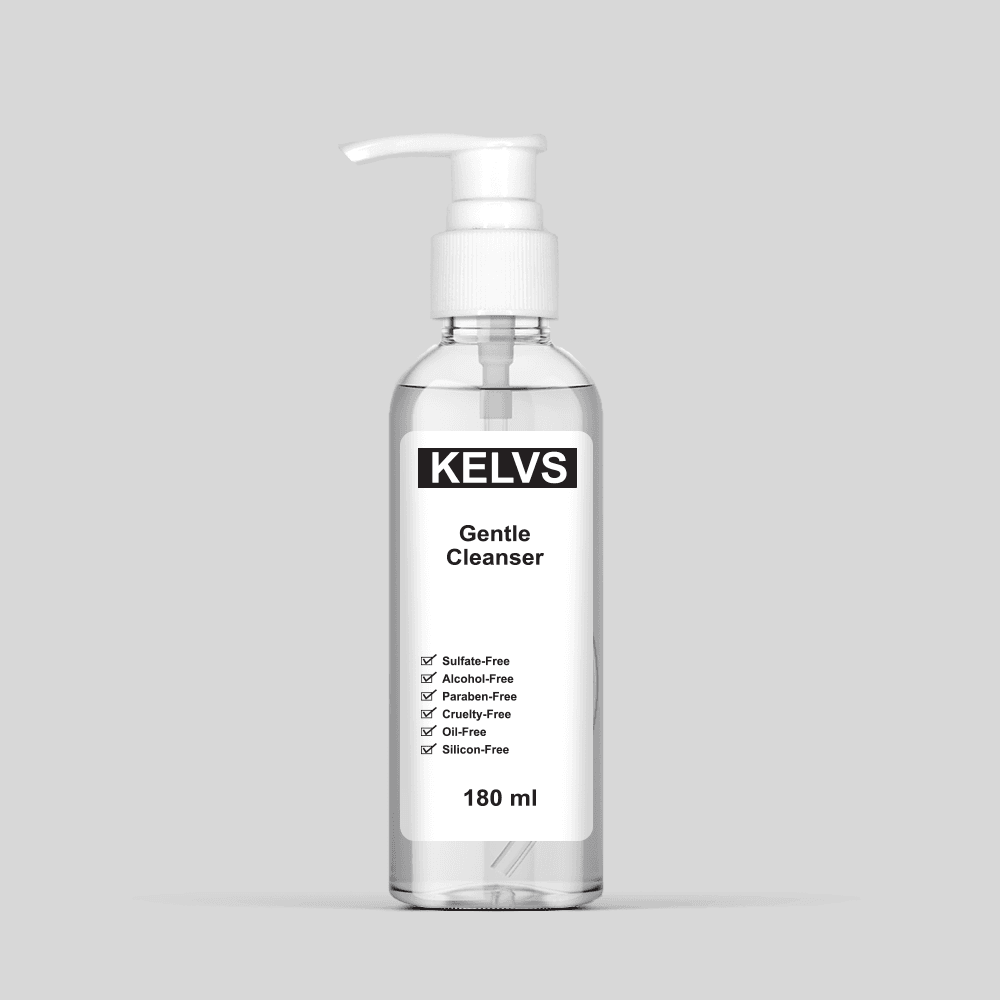
KELVS Gentle Cleanser | Sulfate-Free Daily Cleanse
Scientifically formulated for maximum efficacy with zero harsh irritants. Restores skin balance, clears pores, and accelerates visible recovery.