Salicylic Acid for Acne: How BHA Clears Active Breakouts, Pimples & Cysts
Waleed
09 Oct 2026
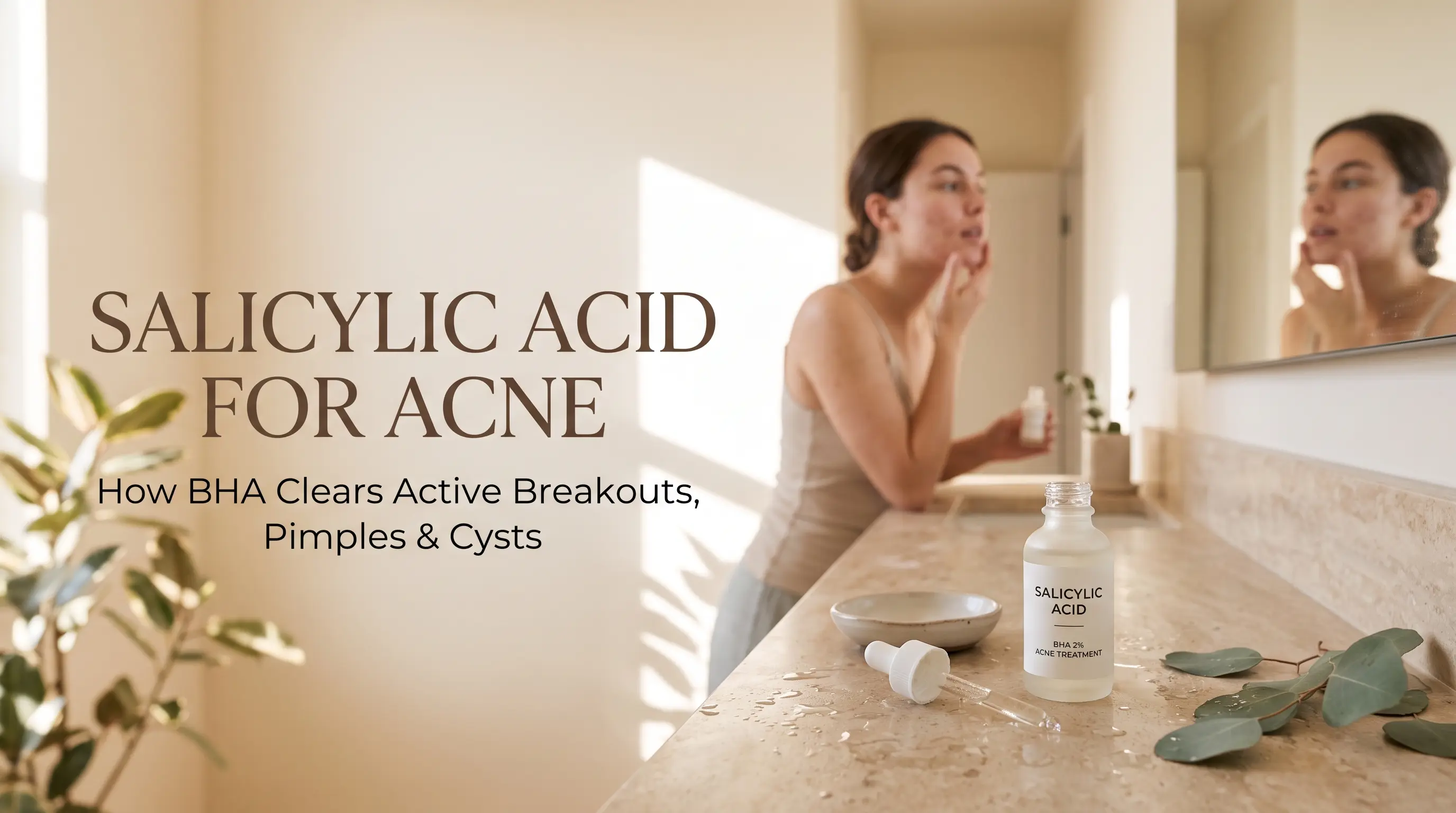
Tired of stubborn pimples? Discover the exact dermatology science of how Salicylic Acid treats active acne, calms red bumps, and prevents future breakouts
 Official
KELVS BHA Salicylic Acid 2% Serum | Clear Pores & Fight Acne
Scientifically formulated for maximum efficacy with zero harsh irritants. Restores skin balance, clears pores, and accelerates visible recovery.
Acne is the most common skin condition in the world, yet it remains one of the most misunderstood. If you have ever stared in the mirror wondering why a painful, red pimple appeared right before a major event, or why standard face washes fail to keep breakouts away, you are not alone.
To truly clear active acne, surface-level scrubbing does not work; you must target what is happening deep inside the follicle. In this clinical guide, we break down the four biological triggers of active breakouts, which types of acne respond best to Salicylic Acid (BHA), and how to use it safely to flatten pimples without ruining your skin barrier.
(Looking for a general introduction to chemical exfoliants? Start with our foundational guide on What Is Salicylic Acid and How Does BHA Work?).
The 4 Biological Triggers of an Active Breakout
Contrary to common belief, acne is not caused by "poor hygiene" or surface dirt. An active breakout is a multi-step biological process driven by four distinct factors working inside your pores:
- Excess Sebum (Oil) Production: Driven by hormones (androgens), humidity, or genetics, sebaceous glands produce thick, sticky sebum in excessive amounts.
- Retention Hyperkeratosis: In acne-prone skin, dead skin cells do not shed invisibly; they become abnormally sticky and clump together inside the pore canal.
- Bacterial Proliferation (Cutibacterium acnes): The trapped mixture of oil and dead keratin creates an anaerobic (oxygen-deprived) chamber where C. acnes bacteria feast and multiply.
- Inflammatory Response: Your immune system detects bacterial overgrowth and rushes white blood cells to the follicle, triggering the heat, swelling, and pus of an inflamed blemish.
Because salicylic acid is oil-soluble, it penetrates straight through the trapped sebum to interrupt all four stages simultaneously.
Inflammatory vs. Non-Inflammatory Acne: What Are You Dealing With?
Not all breakouts are the same. Choosing the right treatment depends entirely on identifying which type of blemish is on your face:
1. Non-Inflammatory Comedones
- Blackheads (Open Comedones): Trapped sebum and dead cells inside an open pore that oxidize when exposed to air, turning dark.
- Whiteheads (Closed Comedones): The pore remains covered by a thin layer of skin, trapping sebum as a small, non-inflamed flesh-colored bump.
2. Inflammatory Acne
- Papules: Firm, tender, red bumps where the pore wall has become irritated. There is no visible pus head yet.
- Pustules: Classic inflamed pimples containing a visible pocket of white or yellow pus surrounded by a ring of red inflammation.
- Nodules and Cysts: Deep, painful, large lumps beneath the skin surface. These occur when the follicle wall ruptures deep in the dermis, spreading inflammation into surrounding tissue.
3. "Fungal Acne" (Malassezia Folliculitis)
Often mistaken for persistent whiteheads, fungal acne is actually an opportunistic yeast overgrowth within the hair follicle, typically aggravated by heat, sweat, and heavy moisturizers. Salicylic acid is effective here because it clarifies the follicle opening and helps normalize the follicular microenvironment.
How Salicylic Acid Treats Different Acne Presentations
How effective is a 2% BHA serum across these specific blemish types? Here is the clinical reality:
Active Papules and Pustules (Red Pimples)
Verdict: Highly Effective.
Salicylic acid is chemically related to acetylsalicylic acid (aspirin). This gives it innate anti-inflammatory properties that calm the throbbing redness and swelling of angry pustules while clearing the trapped debris feeding bacterial growth.
Deep Cystic Acne
Verdict: Supplementary Support Only.
Because cystic acne forms deep within the lower dermis, over-the-counter topical acids cannot fully reach the infection root. A 2% BHA serum helps keep surface follicles clear and minimizes secondary surface inflammation, but persistent cystic acne warrants a dermatologist evaluation for prescription retinoids or oral therapies.
Body Acne & "Strawberry Skin"
Verdict: Incredibly Effective.
BHA is exceptional for chest congestion and back acne ("bacne"). It is also a primary treatment for rough follicular bumps on arms and legs. (Dealing with rough, chicken-skin bumps on your body? Read our complete guide on Lactic Acid for Keratosis Pilaris and Strawberry Skin).
Salicylic Acid vs. Benzoyl Peroxide: Which Clears Acne Better?
The most common debate in acne treatment is choosing between BHA and Benzoyl Peroxide. Both are proven, but they work through completely different mechanisms:
| Feature | Salicylic Acid (BHA) | Benzoyl Peroxide |
|---|---|---|
| Primary Action | Dissolves sebum & unplugs pores from inside | Releases oxygen to kill C. acnes bacteria |
| Best For | Blackheads, whiteheads, oily skin, sensitive acne | Inflamed red pimples, stubborn pustules |
| Irritation Level | Low to Moderate (anti-inflammatory) | Moderate to High (can cause peeling & bleached fabric) |
| Ideal Routine | Leave-on 2% serum 2–3 nights weekly | Targeted spot treatment on stubborn cysts |
Dermatologist Tip: You do not need to choose just one. Many clinical routines use a gentle BHA serum all over the congested zones, while reserving Benzoyl Peroxide strictly as a localized dab on stubborn, active cysts.
How to Clear Acne with BHA Without Damaging Your Skin Barrier
The biggest mistake acne sufferers make is attacking their skin with multiple harsh treatments simultaneously. A compromised moisture barrier increases transepidermal water loss, triggering rebound oiliness and worse breakouts. Follow this safe clinical routine:
1. Cleanse Gently First
Never strip your skin before applying an active acid. Use a sulfate-free, pH-balanced cleanser that lifts surface oil without tightening your skin. (Read our curated recommendations on the best face wash for acne-prone sensitive skin).
2. Apply Your 2% BHA Serum
Dispense 2 to 3 drops of KELVS BHA 2% Serum onto clean, completely dry skin. Because KELVS combines active Salicylic Acid with 1% Hyaluronic Acid, it delivers deep follicular exfoliation while maintaining critical cellular moisture—preventing the flaking and stinging common in older alcohol-based formulas.
3. Layer with Barrier-Supporting Actives
Pair your BHA with soothing ingredients. Salicylic acid layers exceptionally well with Niacinamide to tighten pore appearance and calm redness. (Learn the science behind pairing these two in our guide on Niacinamide for Acne-Prone Skin).
4. Moisturize & Defend
Seal your skin with a lightweight, non-comedogenic moisturizer. In the morning, broad-spectrum SPF 30+ is mandatory; UV radiation darkens healing acne lesions into stubborn, long-lasting marks.
(If you ever over-exfoliate and experience stinging from simple water, stop all active acids immediately and follow our clinical steps on how to repair a damaged skin barrier).
What to Do After the Acne Clears: Fading the Red and Dark Marks
Resolving active inflammation is only the first half of the battle. Once pimples flatten, they frequently leave behind stubborn Post-Inflammatory Hyperpigmentation (PIH) or Post-Inflammatory Erythema (PIE).
While Salicylic Acid prevents new pimples from forming, fading deep brown pigmentation requires tyrosinase-inhibiting actives. Once active blemishes are controlled, transition your routine to incorporate Alpha Arbutin for post-acne dark marks to restore an even, spot-free skin tone.
When to Consult a Dermatologist
While over-the-counter 2% BHA is remarkably effective for comedonal and mild-to-moderate inflammatory acne, you should seek in-person clinical care if:
- You have deep, painful nodulocystic lesions along the jawline or neck.
- Breakouts leave indented atrophic scars (ice-pick or boxcar scars).
- Your acne shows zero response after 8 to 12 weeks of consistent active use.
Frequently Asked Questions
How fast does salicylic acid reduce a pimple?
Thanks to its anti-inflammatory properties, a leave-on 2% BHA serum typically reduces redness and swelling within 24 to 48 hours. Complete flattening and healing of standard pustules generally takes 3 to 5 days without squeezing.
Can I use salicylic acid as a spot treatment?
Yes. While applying it across your full congested area (like the T-zone) prevents future clogs, dabbing a drop directly onto an active blemish overnight helps calm inflammation rapidly.
Does salicylic acid help with hormonal chin acne?
Yes. Hormonal surges cause sebum to thicken along the jawline and chin. Applying 2% BHA 2–3 nights weekly prevents that thick sebum from congealing with dead keratin cells, significantly blunting hormonal flare-ups.
Clinical References:
1. Liu, Y. (2025). Clinical Efficacy of a Salicylic Acid-Containing Gel on Acne: Sebum Regulation and Barrier Enhancement. Journal of Cosmetic Dermatology.
2. Journal of Drugs in Dermatology (2025). Novel 2% Salicylic Acid Cleanser With Polymeric Cleansing Technology Treats Acne Without Compromising Skin Barrier.
3. American Academy of Dermatology (AAD). Guidelines of Care for the Management of Acne Vulgaris.