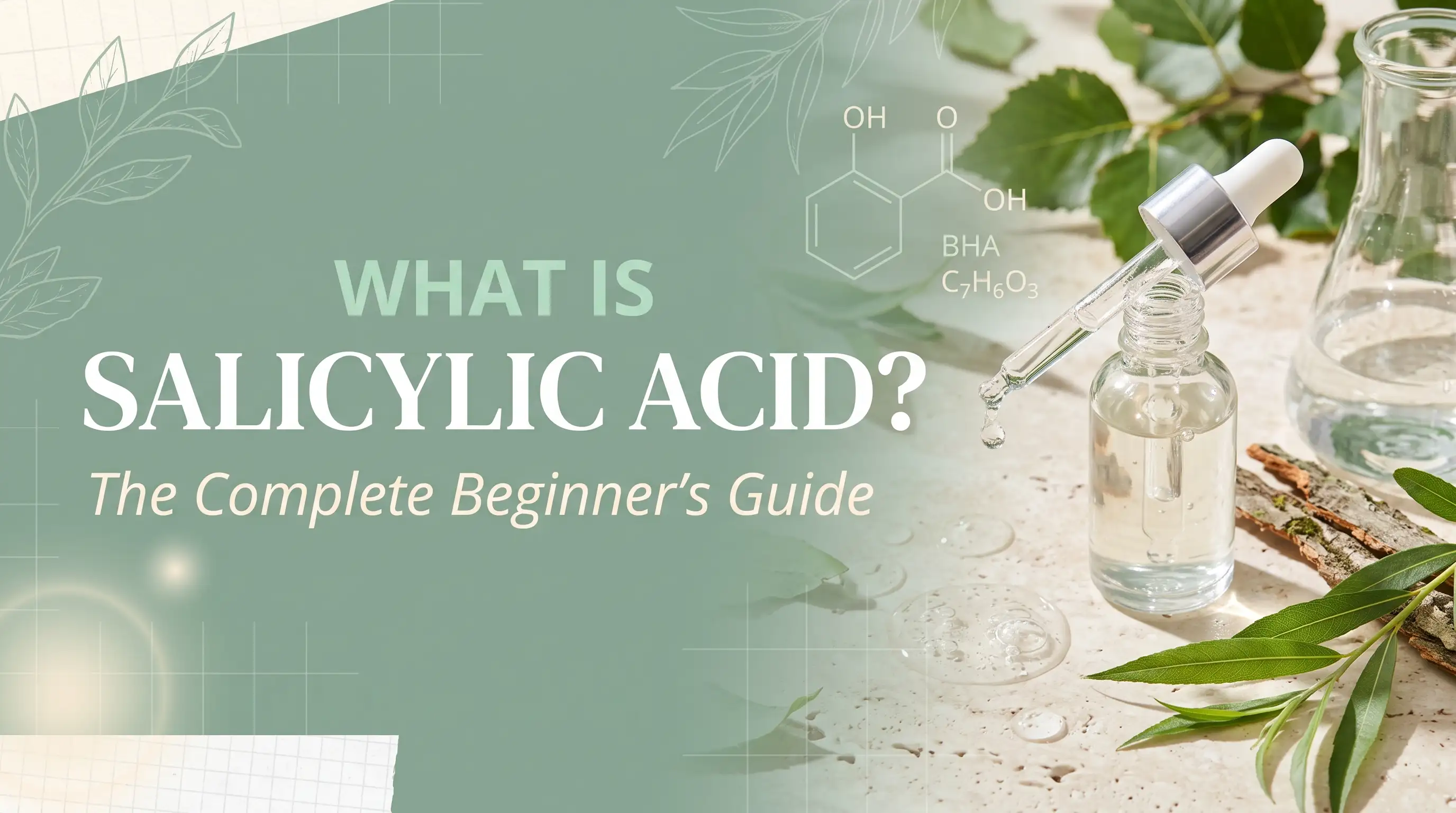
Discover what salicylic acid is, how this powerful BHA unclogs pores, and the safest ways to add it to your skincare routine. A complete, beginner-friendly guide backed by dermatology science
 Official
KELVS BHA Salicylic Acid 2% Serum | Clear Pores & Fight Acne
Scientifically formulated for maximum efficacy with zero harsh irritants. Restores skin balance, clears pores, and accelerates visible recovery.
If you have ever battled stubborn breakouts, annoying blackheads, or excessively oily skin, you have probably heard dermatologists and skincare experts rave about Salicylic Acid. It is widely considered the gold standard of acne-fighting ingredients. But what exactly is this skincare powerhouse, how does it penetrate clogged pores, and how do you use it without stripping your skin barrier?
Whether you are completely new to chemical exfoliants, frustrated with stubborn blackheads in Pakistan's humid climate, or just want to understand your products better, this complete guide breaks down everything you need to know in plain English. No confusing science jargon—just clinical facts on getting clear, balanced skin.
What Exactly Is Salicylic Acid? (Understanding BHA)
At its core, salicylic acid is a Beta Hydroxy Acid (BHA). It originally originates from willow tree bark (specifically wintergreen leaves and white willow bark), though modern skincare relies on a purified, skin-stable cosmetic formulation.
To understand why it is so unique, you need to know the fundamental difference between the two main types of chemical exfoliants:
- AHAs (Alpha Hydroxy Acids): Ingredients like glycolic and lactic acid are water-soluble. They work beautifully on the surface of your skin to smooth texture and brighten tone, but they cannot penetrate oil. (Confused on which acid fits your skin? Read our detailed guide on Lactic Acid vs Salicylic Acid).
- BHAs (Beta Hydroxy Acids): Salicylic acid is oil-soluble. This is its superpower. Because it dissolves in lipids, it bypasses the surface sebum on your face, travels straight down into your pore canal, and clears out impacted oil and dead skin from the inside out.
How Salicylic Acid Works on Your Skin
Think of your pores like tiny drainpipes. In hot, humid conditions, sticky sebum and dead skin cells bond together inside these pipes, creating a dense plug. That plug oxidizes into an open blackhead, or stays trapped under the surface as a whitehead or inflamed pimple. Here is how salicylic acid resolves the clog:
1. Dissolving Dead Skin Cells (Keratolytic Action)
Dead skin cells are held together by protein bonds called desmosomes—essentially microscopic skin glue. Salicylic acid acts as a gentle dissolving agent, breaking down that glue so dead skin cells shed away naturally instead of accumulating inside pores.
2. Deep-Cleaning Clogged Pores
Because of its lipid solubility, salicylic acid liquefies hardened sebum and debris deep inside the follicle lining, loosening blackheads without aggressive physical squeezing.
3. Calming Active Inflammation and Redness
Salicylic acid is structurally related to aspirin (acetylsalicylic acid). It possesses natural anti-inflammatory properties that help soothe painful cystic bumps and calm surface redness.
4. Balancing Excess Sebum
While it will not shut down your oil glands completely (your skin requires natural moisture to stay healthy), regular use regulates oil flow so your skin doesn't look greasy by midday.
Top 5 Salicylic Acid Benefits for Your Skin
- Eliminates Blackheads and Whiteheads: By dissolving plugs from within the follicle, it prevents new blockages from taking root.
- Visibly Tightens Pore Appearance: Pores stretch when packed with oxidized debris. Emptying out the buildup helps them snap back to their natural size.
- Fades Post-Acne Marks: By accelerating cell turnover, it helps speed up the fading of dark spots left behind by healing blemishes. (For persistent brown pigmentation, layer your routine with Alpha Arbutin for post-acne dark marks).
- Smooths Rough, Bumpy Skin Texture: Effectively smooths out textured skin, closed comedones, and congestion along the chin and forehead.
- Prevents Future Breakouts: Rather than acting solely as an emergency spot fix, consistent BHA use stops micro-comedones before they turn into active acne.
Types of Salicylic Acid Skincare Products
Salicylic acid is formulated in several formats depending on your skin sensitivity:
Salicylic Acid Cleansers (Best for Beginners)
Because they are rinsed off after 60 seconds, BHA cleansers provide mild surface pore cleansing with low irritation risk. (If you have reactive skin, pair your routine with our recommended face wash for acne-prone sensitive skin).
Salicylic Acid Toners (Best for Very Oily Skin)
Liquid exfoliating toners sweep away lingering surface oil. Always choose alcohol-free toners to protect your skin barrier.
Salicylic Acid 2% Serums (Best for Stubborn Clogs & Deep Acne)
Serums represent the gold standard of leave-on treatments, providing maximum over-the-counter efficacy (2%). A well-designed formula—such as KELVS BHA 2% Serum—pairs active Salicylic Acid with 1% Hyaluronic Acid to ensure deep exfoliation occurs without the flaking or tightness common in older alcohol-based acne treatments.
How to Use Salicylic Acid Safely in Your Routine
Because BHA is potent, introducing it incorrectly can dry out your moisture barrier. Follow this dermatologist-approved starting routine:
Step 1: Choose the Right Concentration (0.5% to 2%)
For home use, look for formulations between 0.5% and 2%. Two percent is the clinically proven over-the-counter ceiling for leave-on products.
Step 2: Follow the "Start Slow" Rule
Begin by using your salicylic acid serum just 2 or 3 nights a week on non-consecutive days. Only increase frequency once your skin shows full tolerance over 2–3 weeks.
Step 3: Layering and Barrier Support
Apply to clean, completely dry skin after cleansing. Allow 60 seconds for absorption, then follow with a ceramide-rich moisturizer to seal in hydration.
Step 4: Daily Broad-Spectrum SPF
Freshly exfoliated skin requires UV protection. Always apply broad-spectrum sunscreen (SPF 30+) every single morning to prevent sun sensitivity and darkening of healing acne scars.
What to Mix With Salicylic Acid (And What to Avoid)
Safe and Beneficial Pairings
- Hyaluronic Acid: Replenishes water inside skin cells to counter exfoliation dryness.
- Niacinamide: A gold-standard partner. While BHA unclogs the pore, niacinamide regulates sebum and calms acne inflammation.
- Ceramides & Peptides: Maintain the lipid matrix of your skin barrier.
Ingredients to Avoid in the Same Routine Step
- Retinoids: Combining leave-on BHA with retinol in the same routine step risks severe barrier irritation. Alternate nights instead. (If you ever over-exfoliate, review our clinical guide on how to repair your skin barrier).
- Pure L-Ascorbic Acid (Vitamin C): Layering multiple low-pH acids simultaneously can trigger stinging and flushing. Use Vitamin C in the morning and BHA at night.
- Abrasive Physical Scrubs: Avoid walnut or apricot shell scrubs while using chemical exfoliants.
Salicylic Acid Purging vs. Breaking Out
When starting BHA, you may experience temporary skin purging. Because the acid accelerates cell turnover, dormant micro-comedones surface faster.
- Skin Purging: Occurs in areas where you typically break out; resolves within 3 to 5 weeks. Continue your routine with gentle moisturizing.
- True Breakout / Irritation: Characterized by new redness, itching, or hives in areas you never previously broke out. Discontinue use and focus on barrier repair.
Clinical Research & Recent Studies
While early acne formulas had a reputation for being excessively drying, modern cosmetic science has evolved:
- A 2025 clinical study in the Journal of Cosmetic Dermatology demonstrated that modern salicylic acid formulas paired with humectants effectively regulate sebum while simultaneously enhancing skin barrier hydration.
- A 2026 systematic review verified that 2% salicylic acid remains among the safest, most reliable topical interventions for comedonal and mild-to-moderate inflammatory acne.
Frequently Asked Questions
Can I use salicylic acid every day?
Once your skin has built tolerance over 3–4 weeks, oily and acne-prone skin can tolerate daily application. Sensitive or combination skin types generally see optimal results using it 2–3 nights weekly.
Does salicylic acid cause peeling?
If overused or applied without moisturizer, mild flaking can occur. If flaking begins, reduce application frequency to twice a week and increase barrier-restoring moisturizers.
Is salicylic acid safe during pregnancy?
While low-concentration over-the-counter wash-off products are widely considered low-risk, dermatologists recommend consulting your obstetrician before introducing leave-on active acids during pregnancy.
Final Thoughts
Salicylic acid remains the most reliable, dermatologist-backed active for clearing stubborn blackheads, unclogging pores, and calming breakouts. By selecting a pH-balanced 2% formula, introducing it gradually, and supporting your barrier with daily hydration and sunscreen, you can achieve clear, refined skin safely.
Scientific References:
1. Liu, Y. (2025). Clinical Efficacy of a Salicylic Acid-Containing Gel on Acne: Sebum Regulation and Barrier Enhancement. Journal of Cosmetic Dermatology.
2. Journal of Drugs in Dermatology (2025). Novel 2% Salicylic Acid Cleanser With Polymeric Cleansing Technology Treats Acne Without Compromising Skin Barrier.
3. Veronica, A.D. (2026). The Comprehensive Systematic Review of Effectiveness and Safety of Salicylic Acid Peels. International Journal of Medical and Health Sciences Research.