Niacinamide and Hyaluronic Acid: Do You Really Need Both? (Pakistan Skincare Guide)
Waleed
17 May 2026
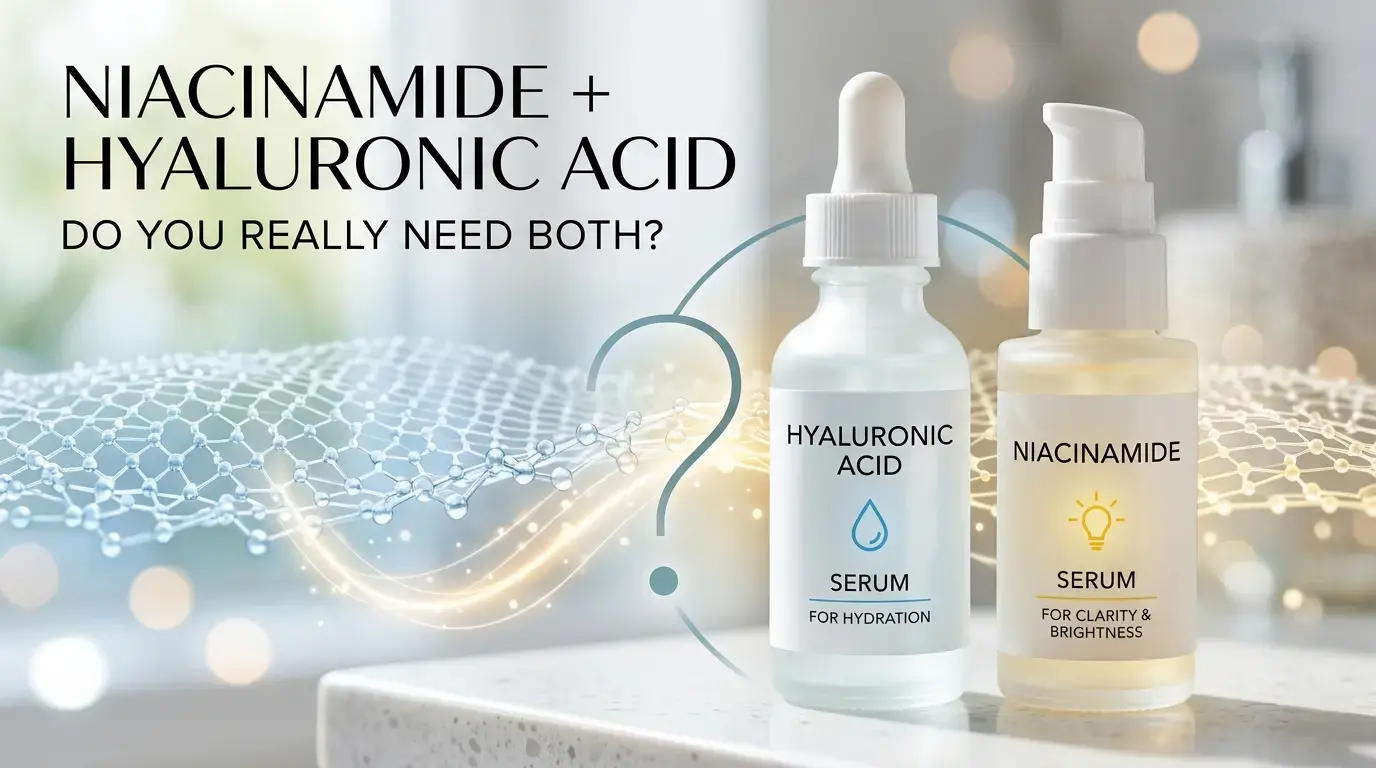
Niacinamide and hyaluronic acid appear together in almost every skincare discussion — but they do very different things, and not every skin type actually needs both. This guide explains what each ingredient does, why they are often combined, when the combination makes sense for Pakistani skin, and how to layer them correctly in a routine that actually works.
Introduction
If you have spent any time researching skincare in Pakistan — whether through local beauty communities, international blogs, or ingredient-focused social media content — you have almost certainly come across both niacinamide and hyaluronic acid. They appear together so frequently in routine recommendations that many people assume they are a natural pair, like two ingredients that were simply designed to be used together.
But niacinamide and hyaluronic acid are quite different in what they do, how they work, and which skin concerns they address. One is primarily an active ingredient that regulates biological processes in the skin; the other is primarily a hydrating agent that works at the surface level. Understanding this distinction answers the question that many Pakistani skincare beginners ask: do I actually need both, or will one of them do the job?
The answer depends on your skin type and your primary concern — and this guide explains both why and how to decide, along with the correct way to use them together when the combination is appropriate for your skin.
What Is Niacinamide?
Niacinamide is the active cosmetic form of vitamin B3 — a water-soluble vitamin that works across multiple biological pathways in skin simultaneously. Unlike most skincare ingredients that perform a single function, niacinamide addresses several concerns at once: it regulates sebum production in sebaceous glands, reducing oiliness; it stimulates ceramide synthesis in the stratum corneum, strengthening the skin barrier; it modulates pro-inflammatory cytokine production, reducing redness and reactive episodes; and it inhibits melanosome transfer, contributing to gradual tone-evening over time.
These properties make niacinamide a uniquely versatile active ingredient — one that produces meaningful improvement for oily, acne-prone, sensitive, and barrier-damaged skin simultaneously, without requiring different products for different concerns. At 4 to 5 percent concentration, it is well-tolerated, thermally stable, and appropriate for twice-daily long-term use across most skin types.
What Is Hyaluronic Acid?
Hyaluronic acid is a naturally occurring glycosaminoglycan — a large sugar molecule — found throughout the body's connective tissues, joints, and skin. In the skin specifically, it acts as a humectant: it draws water molecules toward itself and holds them, maintaining the water content of the stratum corneum and dermis that keeps skin plump, soft, and comfortable.
In skincare, hyaluronic acid is used as a topical humectant serum or ingredient that draws moisture from the deeper skin layers and, in humid environments, from the ambient air, into the stratum corneum. This produces a rapid improvement in skin hydration — a reduction in tightness, dryness, and the dehydrated appearance that makes fine lines and uneven texture more visible. Its effect is primarily physical and relatively immediate compared to actives like niacinamide, which require consistent biological accumulation over weeks to produce their results.
Hyaluronic acid itself does not actively repair the barrier, regulate oil, reduce inflammation, or address pigmentation. It hydrates — specifically and well — but it is not an active ingredient in the sense that niacinamide is. This distinction is central to understanding when each ingredient is necessary.
Niacinamide vs Hyaluronic Acid — What Is the Difference?
| Consideration | Niacinamide | Hyaluronic Acid |
|---|---|---|
| Main Purpose | Active ingredient: oil control, barrier repair, inflammation reduction, tone-evening | Humectant: draws water into the skin surface and reduces dehydration sensation |
| Hydration Support | Indirect — improves barrier's moisture retention capacity through ceramide stimulation | Direct — draws water into stratum corneum for immediate hydration improvement |
| Oil Control | Yes — reduces sebum production over 8 to 12 weeks of consistent use | None — does not affect sebaceous gland activity |
| Barrier Support | Active — stimulates ceramide synthesis; structurally repairs the barrier over time | Passive — does not repair the barrier; works within it to retain water |
| Pigmentation Support | Yes — inhibits melanin transfer; gradual tone-evening | None — no effect on melanin production or transfer |
| Acne-Prone Skin Suitability | Excellent — addresses sebum, inflammation, barrier, and PIH simultaneously | Good — non-comedogenic; appropriate for dehydrated acne-prone skin |
| Sensitive Skin Suitability | High — anti-inflammatory and barrier-repairing at 2 to 5% | High — generally very well tolerated; no active ingredient risks |
| Summer Suitability in Pakistan | High — thermally stable; oil control beneficial in heat | Moderate — in very low-humidity conditions, can draw water out of skin; best used with a moisturiser to seal |
How Niacinamide Helps the Skin Barrier
The skin barrier — the outermost lipid matrix of the stratum corneum — is what keeps moisture in the skin and environmental stressors out. It is composed primarily of ceramides, cholesterol, and fatty acids, and its integrity determines how well the skin retains moisture, tolerates actives, and resists inflammatory triggers.
Niacinamide supports the barrier by stimulating the synthesis of ceramides within the skin's own keratinocytes — increasing the ceramide levels available to form and maintain the lipid matrix. This is not a surface-level effect; it is a genuine biological change in the stratum corneum's composition over four to eight weeks of consistent use. Higher ceramide levels mean a less permeable barrier, lower transepidermal water loss (TEWL), better moisture retention between applications, and improved tolerance for environmental stressors and topical actives.
For skin that is currently compromised — by harsh cleansers, over-exfoliation, or the steroid-depleting effects of formula cream use — niacinamide's ceramide stimulation is one of the few cosmetic mechanisms that directly rebuilds what has been lost, rather than simply hydrating the surface of a depleted barrier.
How Hyaluronic Acid Helps Hydration
Hyaluronic acid's mechanism is distinct from niacinamide's and operates at a different level of skin biology. Rather than stimulating the skin's internal production of barrier components, hyaluronic acid works at the skin surface and just beneath it — attracting water molecules through its exceptionally high water-binding capacity (a single hyaluronic acid molecule can bind up to 1,000 times its weight in water) and holding them in the stratum corneum.
The result is rapid and noticeable: skin that was tight, dry, or dehydrated feels significantly more comfortable within minutes of application. The visible "plumping" effect — reduced fine-line appearance and a more supple surface texture — is real and measurable, though it is a result of improved hydration rather than structural change to the skin.
A critical caveat for hyaluronic acid use in Pakistan's climate: in very low-humidity environments — including air-conditioned interiors, dry winter air across Punjab, and arid desert climates — hyaluronic acid's humectant action can draw water from the deeper skin layers rather than from the ambient air, potentially worsening surface dehydration if a moisturiser is not applied over it to create an occlusive seal. This is the most common mistake with hyaluronic acid use: applying it without following it with a moisturiser, particularly in indoor or dry-air conditions.
According to the American Academy of Dermatology's guidance on moisturisers, humectant ingredients including hyaluronic acid work most effectively when followed by an emollient or occlusive moisturiser that seals the humectant's water-binding effect into the skin — a sequencing principle that is essential for hyaluronic acid to function correctly in Pakistan's variable climate.
Do You Really Need Both Ingredients?
This depends on your skin type and primary concerns — and the honest answer is that not every skin type benefits equally from both.
Oily and acne-prone skin: niacinamide is the higher-priority ingredient. Its sebum-regulating, anti-inflammatory, and barrier-repairing actions address the core concerns of this skin type directly. Hyaluronic acid can be a useful addition if oily skin is simultaneously dehydrated — a common presentation in Pakistan among people who have over-cleansed — but for skin that is producing adequate oil and not experiencing tightness or dryness, a lightweight ceramide moisturiser after niacinamide may be sufficient without a dedicated hyaluronic acid step.
Dry and dehydrated skin: both ingredients are genuinely useful, but they address different components of dryness. Hyaluronic acid addresses the water deficit that produces the tight, uncomfortable feeling of dry skin immediately. Niacinamide addresses the underlying barrier compromise that causes moisture to evaporate faster than it can be replenished — the root cause that hyaluronic acid alone, without barrier support, cannot resolve. The combination produces more sustained hydration improvement than either ingredient alone.
Sensitive and barrier-damaged skin: niacinamide is the more therapeutically important ingredient for barrier repair. Hyaluronic acid provides useful surface comfort during the recovery phase but does not address the structural ceramide deficit. Use both: niacinamide for the biological repair, hyaluronic acid for the day-to-day hydration comfort while the repair accumulates.
Normal to combination skin with no particular active concerns: niacinamide alone may be sufficient if oil control, barrier maintenance, and basic tone-evening are the goals. Hyaluronic acid adds a layer of hydration comfort that most people find pleasant, but it is not producing an active biological change that niacinamide is not already supporting through its barrier-repair mechanism.
Can Niacinamide and Hyaluronic Acid Be Used Together?
Yes — this is one of the most straightforwardly compatible ingredient combinations in skincare. There are no documented interactions, incompatibilities, or irritation concerns between niacinamide and hyaluronic acid at any standard cosmetic concentration. They are both water-soluble, work at complementary levels of skin biology (one structural, one surface), and are each individually well-tolerated across all skin types including sensitive and barrier-compromised presentations.
Many commercial serums include both in the same formula, and the combination is specifically recommended in dermatological literature for dry, sensitive, and barrier-damaged skin — precisely because niacinamide's barrier repair and hyaluronic acid's surface hydration address two distinct aspects of the same problem simultaneously.
Which Ingredient Should Be Applied First?
Apply hyaluronic acid first, then niacinamide. This layering order follows the standard serum sequencing principle of thinnest texture to thicker, and in this case, the more surface-level humectant before the more bioactive serum.
Applying hyaluronic acid to skin that is still slightly damp after cleansing — before it dries completely — maximises the humectant's water-binding opportunity. Niacinamide, applied immediately after the hyaluronic acid step, adds its active biological benefits to a skin surface that is already hydrated and more receptive.
Full layering sequence:
- Gentle cleanser — pH-balanced, fragrance-free; pat dry but leave skin slightly damp
- Hyaluronic acid serum — applied to slightly damp skin; 2 to 3 drops pressed gently in; allow 30 to 60 seconds for absorption; do not allow to dry completely before the next step, as hyaluronic acid seals most effectively while the skin surface is still marginally damp
- Niacinamide serum — 2 to 3 drops applied after hyaluronic acid; press in gently; 60 seconds absorption before the next step
- Ceramide moisturiser — applied while skin is still slightly damp; this step is essential — it seals the hyaluronic acid's water-binding effect and provides the lipid component that the barrier needs to retain moisture between applications
- Mineral sunscreen SPF 30 or above (morning only) — final step; non-negotiable in Pakistan's UV environment for both barrier maintenance and any pigmentation management
Morning and Evening Routine Examples
Morning routine:
- Gentle pH-balanced cleanser — lukewarm water; pat skin mostly dry, leaving slightly damp
- Hyaluronic acid serum — 2 to 3 drops on damp skin; 30 to 60 seconds
- Niacinamide serum — 2 to 3 drops; press in gently; 60 seconds absorption
- Ceramide moisturiser — lightweight formula for oily skin; richer lotion for dry skin; applied while still slightly damp
- Mineral sunscreen SPF 30 or above — final morning step; non-negotiable
Evening routine:
- Double cleanse if wearing sunscreen — micellar water first, then gentle cleanser; single cleanse if no sunscreen worn
- Hyaluronic acid serum — on slightly damp skin; 30 to 60 seconds
- Niacinamide serum — KELVS Niacinamide Serum applied after hyaluronic acid absorption; 60 seconds; its lightweight water-based formula absorbs cleanly over hyaluronic acid without pilling or disrupting the hydration layer beneath it
- Ceramide moisturiser — richer formula at night to support overnight barrier repair; applied while skin is still slightly damp over the serums
Sunscreen is applied in the morning only. The evening routine is the longer repair window — niacinamide's ceramide-stimulating action and hyaluronic acid's overnight water retention both benefit from uninterrupted overnight skin activity.
Best Routine for Dry and Dehydrated Skin in Pakistan
Dehydration is one of the most misdiagnosed skin conditions in Pakistan. Many users with oily skin are simultaneously dehydrated at the stratum corneum level — the skin produces excess oil while losing moisture rapidly through a compromised barrier. The result is skin that is both shiny and tight, a presentation that is common across Pakistan's population but that stripping oil-control routines consistently worsen.
Summer heat and humidity (Karachi, Hyderabad, coastal cities): humidity in coastal Pakistan means that hyaluronic acid has a reliable ambient water source to draw from, making it particularly effective in these conditions. Apply to damp post-cleanse skin and follow immediately with a lightweight ceramide gel moisturiser — not a heavy cream, which would trap sweat and increase congestion in high-humidity heat. In these conditions, oily skin may find hyaluronic acid alone (without niacinamide) provides adequate hydration comfort, with niacinamide remaining as the primary active serum for oil control.
Air-conditioned indoor environments (year-round): the most consistent dehydration source for Pakistani office workers and urban residents. Air conditioning dramatically reduces indoor humidity, creating a dry environment in which hyaluronic acid's humectant action draws from skin's own moisture reserves rather than ambient air. In these conditions, always follow hyaluronic acid with a ceramide moisturiser — without it, hyaluronic acid can worsen the very dryness it is intended to address in low-humidity indoor environments.
Punjab and KPK winters (Lahore, Islamabad, Peshawar — October to February): cold dry air and indoor heating create high transepidermal water loss conditions that deplete the stratum corneum rapidly. In winter, niacinamide's barrier-repairing ceramide stimulation becomes particularly important — it addresses the underlying reason moisture evaporates so quickly in cold conditions. Hyaluronic acid addresses the surface dryness symptom; niacinamide addresses the structural cause. Using both together in winter, sealed with a richer ceramide cream, produces more sustained hydration than either ingredient alone.
After harsh skincare routine recovery: for users whose skin has been dehydrated by over-cleansing, formula cream use, or aggressive exfoliation, the combination of niacinamide for barrier repair and hyaluronic acid for surface hydration comfort provides both immediate relief and structural recovery. Neither ingredient disrupts the healing process; both support it from complementary directions.
For more on barrier recovery: How to Repair Your Skin Barrier After Whitening Cream Damage.
Is This Combination Safe for Sensitive Skin?
Yes — this is one of the gentlest and most broadly safe ingredient combinations available in skincare, and it is specifically appropriate for sensitive and reactive skin types.
Hyaluronic acid is essentially inert as an active ingredient — it draws water and holds it without interacting with biological pathways in ways that could cause irritation. Adverse reactions to pure hyaluronic acid serums are extremely rare. The occasional reaction attributed to hyaluronic acid products is almost always caused by a co-ingredient in the formula (fragrance, preservatives, or an additional active) rather than the hyaluronic acid itself.
Niacinamide at 2 to 5 percent is similarly well-tolerated across sensitive skin types, with the anti-inflammatory action actively reducing reactivity over consistent use rather than worsening it. Together, the two ingredients produce a routine layer that improves hydration and barrier function simultaneously without the exfoliation, pH disruption, or photosensitisation that make other actives less suitable for reactive skin.
For very sensitive skin, a patch test — applying each serum individually to the inner arm over five to seven days before full-face use — is a sensible precaution. And keeping the rest of the routine simple is important: adding hyaluronic acid and niacinamide to an already-loaded multi-active routine risks confusing any reaction with the wrong ingredient. Let these two be the serums in a minimal routine and build from there once tolerance is confirmed.
According to DermNet's clinical review of niacinamide, it is among the most broadly tolerated cosmetic actives across all skin types in dermatological practice — a profile that, combined with hyaluronic acid's similarly excellent tolerability, makes this one of the recommended starting combinations for patients with reactive or sensitised skin building their first active skincare routine.
Which Ingredient Is Better for Oily Skin?
For oily skin, niacinamide is the more actively beneficial ingredient. Its sebum-regulating action directly addresses the root cause of oiliness — overactive sebaceous glands — producing measurable reductions in sebum output over eight to twelve weeks of consistent twice-daily use. Hyaluronic acid does not affect sebaceous gland activity and does not reduce oiliness.
However, the "oily skin does not need hydration" assumption is one of the most common and consequential skincare misconceptions in Pakistan. Oily skin and dehydrated skin coexist frequently — particularly when oily skin has been managed with stripping cleansers or astringent toners that deplete the barrier without addressing the underlying sebum overproduction. When this occurs, the skin compensates for moisture loss by producing more oil, worsening the oiliness while also becoming tight and reactive.
For oily-dehydrated skin — a very common presentation in Pakistan, particularly among users who have used formula creams, alcohol-based toners, or harsh cleansers — a lightweight hyaluronic acid serum applied before niacinamide provides the surface hydration that breaks the dehydration-oiliness compensation cycle, while niacinamide addresses the sebum overproduction simultaneously. The two together produce faster stabilisation of oily skin than niacinamide alone on barrier-depleted skin.
Which Ingredient Is Better for Dry Skin?
For dry skin, hyaluronic acid produces faster and more immediately noticeable relief — the tightness and discomfort of dry skin respond visibly within minutes of hyaluronic acid application, in a way that niacinamide's gradual barrier repair does not achieve until weeks of use have accumulated.
However, hyaluronic acid alone addresses the symptom of dryness rather than its cause. If dryness is driven by a compromised barrier with high TEWL — which it often is in Pakistani users with a history of harsh product use — hyaluronic acid will provide temporary relief that must be repeated continuously because the barrier through which moisture is escaping has not been addressed. Niacinamide's ceramide stimulation, building over four to eight weeks, reduces the TEWL rate that makes dryness persistent regardless of how much moisturiser is applied.
For dry skin that is driven by barrier compromise rather than purely environmental dehydration, both ingredients working simultaneously — hyaluronic acid for immediate surface comfort, niacinamide for structural barrier repair — produce more lasting improvement than either ingredient alone. Within eight to twelve weeks of the combination, many dry-skin users find that their moisturiser lasts significantly longer, their skin feels comfortable without frequent reapplication, and the tight sensation after cleansing has reduced substantially.
How Long Results Take
| Timeframe | What to Expect |
|---|---|
| Weeks 1 to 2 | Hyaluronic acid's hydration benefit is apparent from the first application — reduced tightness, more comfortable skin surface. Niacinamide's anti-inflammatory action begins reducing redness and reactivity. No significant change in oiliness or barrier function from niacinamide yet. |
| Weeks 3 to 4 | Moisturiser begins to last longer between applications as niacinamide's ceramide-building starts reducing TEWL. Oily skin users notice early reduction in shine. Skin texture becoming smoother. Hyaluronic acid's effect consistent and sustained with continued application. |
| Weeks 5 to 8 | Meaningful barrier improvement visible; skin tolerates environmental triggers with less reactivity; oiliness measurably reduced; dry skin significantly more comfortable throughout the day. Niacinamide's structural improvement is accumulating to a level that produces sustained surface change. |
| Weeks 8 to 12 | Sustained hydration balance across the day; barrier integrity demonstrably improved; skin handles Pakistan's climate fluctuations with noticeably less reactive response. Both ingredients are producing compounding benefits from complementary mechanisms. |
Common Mistakes When Combining Niacinamide and Hyaluronic Acid
- Thinking hyaluronic acid replaces moisturiser — the most common and consequential mistake; hyaluronic acid is a humectant that draws water, not an occlusive that seals it; without a ceramide moisturiser applied over it, particularly in Pakistan's air-conditioned or dry-air environments, hyaluronic acid can increase TEWL by drawing moisture from deeper skin layers; always apply moisturiser after hyaluronic acid
- Using too many serums alongside the combination — adding retinol, AHAs, vitamin C, and alpha arbutin to a routine that already contains hyaluronic acid and niacinamide creates a combined active load that increases irritation risk and makes attribution of any reaction difficult; let this pairing be the complete active step in a simplified routine
- Applying hyaluronic acid to completely dry skin in low-humidity environments — in Pakistan's dry interior heat or air-conditioned indoor spaces, applying hyaluronic acid to completely dry skin rather than damp skin reduces its humectant efficiency and risks drawing moisture from deeper layers; always apply to slightly damp post-cleanse skin and follow immediately with moisturiser
- Expecting niacinamide to provide immediate hydration — niacinamide's hydration benefit is indirect and accumulates over weeks through ceramide synthesis; the immediate surface hydration that some users expect from a serum is provided by hyaluronic acid, not niacinamide; both are needed for the immediate and the sustained effect
Who Should Use This Combination?
- Dry and dehydrated skin users — the most directly indicated group; hyaluronic acid for immediate comfort, niacinamide for the structural barrier repair that makes the hydration sustainable rather than temporary
- Sensitive skin users — one of the gentlest available active combinations; appropriate even for reactive, recently sensitised, or barrier-damaged skin; niacinamide's anti-inflammatory action progressively reduces the reactivity that makes sensitive skin so uncomfortable to manage
- Oily-dehydrated skin users — the combination that breaks the dehydration-oiliness compensation cycle; niacinamide addresses the sebum excess while hyaluronic acid addresses the moisture deficit that is driving compensatory sebum production
- People recovering from harsh skincare routines or formula cream damage — niacinamide rebuilds ceramide-depleted barriers while hyaluronic acid provides surface hydration comfort during the recovery phase; both are gentle enough to use during active recovery without adding barrier stress
- Minimalist skincare users — two serums, cleanser, ceramide moisturiser, and sunscreen is a complete and effective routine for most skin types; this pairing covers hydration and barrier support without requiring additional products
For the minimal routine framework: Minimalist Skincare Routine for Sensitive Skin in Pakistan.
Frequently Asked Questions
Can niacinamide and hyaluronic acid be used together?
Yes — this is one of the most compatible ingredient combinations in skincare. Both are water-soluble, both are appropriate for all skin types, and neither destabilises or reduces the efficacy of the other. They work at complementary levels of skin biology — hyaluronic acid at the surface for immediate hydration, niacinamide at the structural level for barrier repair and oil control — making the combination more effective for most skin types than either ingredient alone.
Which should I apply first — hyaluronic acid or niacinamide?
Apply hyaluronic acid first, then niacinamide. Hyaluronic acid should go onto slightly damp skin immediately after cleansing, where it can bind the available surface moisture most effectively. Niacinamide is applied after, adding its active biological benefits to a skin surface that is already hydrated and more receptive. Follow both with a ceramide moisturiser to seal in the layers and prevent the hyaluronic acid from drawing moisture out in dry conditions.
Do I still need moisturiser if I use hyaluronic acid?
Yes — without exception. Hyaluronic acid is a humectant that draws water to the skin surface; a moisturiser provides the emollient and occlusive components that seal that water into the stratum corneum. Without a moisturiser applied over hyaluronic acid, particularly in Pakistan's air-conditioned environments and dry interior conditions, the humectant effect can work in reverse — drawing moisture from deeper skin layers into the surface where it then evaporates, leaving skin more dehydrated than before application. Always follow hyaluronic acid with a ceramide moisturiser.
Is this combination safe for sensitive skin?
Yes — it is specifically appropriate for sensitive skin. Hyaluronic acid is essentially inert as an active ingredient and very rarely causes adverse reactions. Niacinamide at 2 to 5 percent is anti-inflammatory by mechanism — it reduces the reactivity that defines sensitive skin over consistent use rather than provoking it. Together they provide surface comfort and structural barrier support without the pH disruption, exfoliation, or photosensitisation that make other ingredient combinations less suitable for reactive skin types.
Can oily skin use both niacinamide and hyaluronic acid?
Yes. Oily skin and dehydrated skin frequently coexist in Pakistan — particularly when harsh cleansers and stripping routines have depleted the barrier's moisture retention capacity while leaving sebum overproduction unchanged or worsened. For oily-dehydrated skin, hyaluronic acid provides the surface hydration that reduces the dehydration signal driving compensatory sebum production, while niacinamide directly reduces sebum output and improves barrier integrity. Use a lightweight gel-based formula for the ceramide moisturiser step to avoid heaviness that would be uncomfortable on oily skin in Pakistan's heat.
Should I use them morning or night?
Both ingredients are appropriate for morning and evening use. Niacinamide's oil control, barrier repair, and anti-inflammatory benefits accumulate through consistent twice-daily application. Hyaluronic acid's hydration benefit is most immediately noticeable when the skin is clean and slightly damp — both the morning and evening post-cleanse windows provide this. The only morning-specific addition is mineral sunscreen as the final step, which protects the barrier progress that niacinamide is building and prevents UV-triggered inflammation that would require niacinamide to manage.
Conclusion
Niacinamide and hyaluronic acid are genuinely different ingredients that address genuinely different aspects of skin health — and for most Pakistani skin types dealing with the combined pressures of heat, humidity, dehydration, oiliness, and barrier compromise, both have a real and non-overlapping role to play. Hyaluronic acid provides the surface hydration that makes dry and dehydrated skin immediately more comfortable. Niacinamide provides the structural barrier repair, oil control, and anti-inflammatory protection that makes that hydration sustainable over time.
Whether you need both depends on your skin. Oily acne-prone skin with no dryness concerns may need niacinamide primarily. Very dry skin with no oiliness may find hyaluronic acid's immediate comfort more pressing. Most Pakistani skin types — navigating a climate that simultaneously dehydrates in dry conditions and over-stimulates sebum in humid ones — find that the combination, in a simple, sequenced routine with a ceramide moisturiser and mineral sunscreen, produces more balanced and sustained skin health than either ingredient could achieve independently.
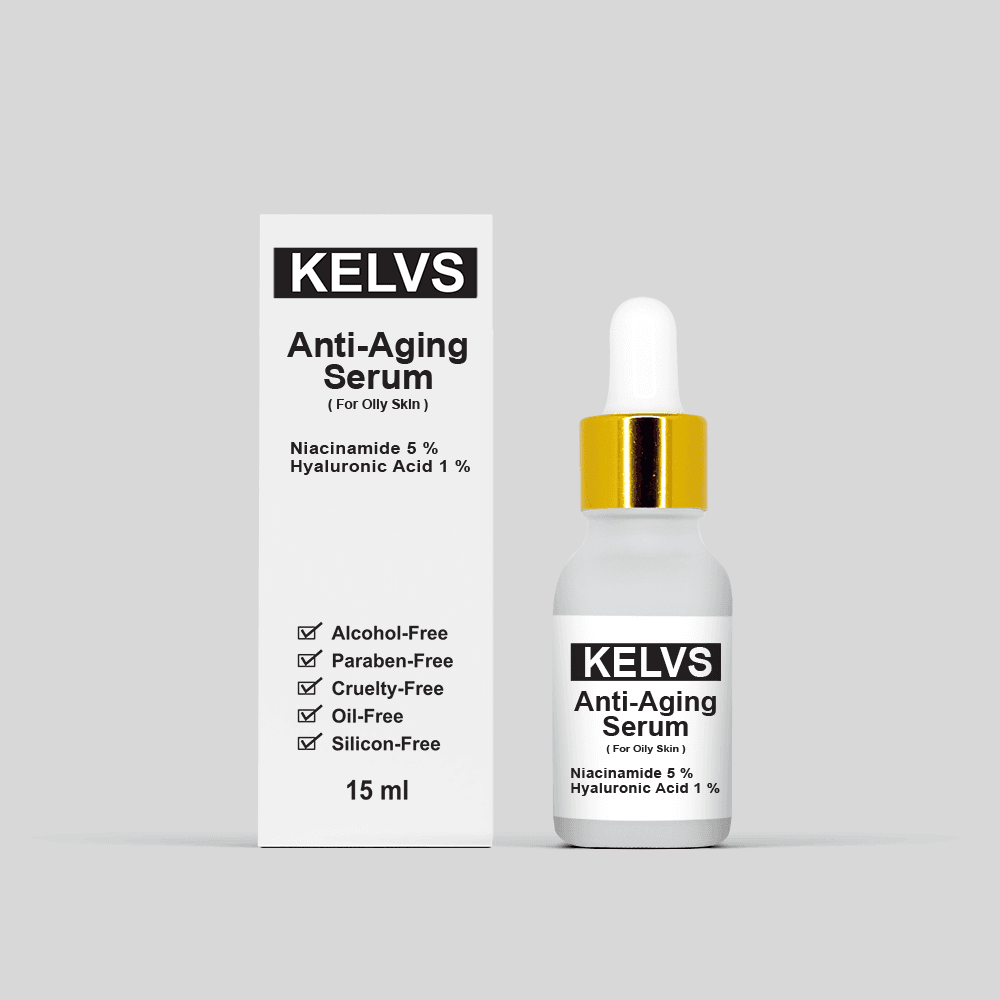 Official
KELVS Anti Aging Serum | Minimizes Pores & Controls Oil
Scientifically formulated for maximum efficacy with zero harsh irritants. Restores skin balance, clears pores, and accelerates visible recovery.