What Is Niacinamide? The Complete Guide for Acne, Oil Control & Skin Barrier (Pakistan Guide)
Waleed
27 Apr 2026

Niacinamide is a powerhouse for Pakistani skin. It controls excess oil, shrinks acne, calms redness, and repairs barriers damaged by harsh whitening creams. It tackles heat, humidity, and uneven tone all at once without causing irritation.
Introduction
If there is one skincare ingredient that consistently earns its place in routines across every skin type, every concern, and every climate zone — niacinamide is it. It controls oil without drying the skin. It reduces acne without bleaching or stripping. It strengthens the skin barrier without adding weight or congestion. It improves uneven tone without the photosensitisation that accompanies stronger brightening agents. In a category full of trade-offs, niacinamide is notable for how few it asks of the people who use it.
For Pakistani skin specifically, niacinamide addresses an unusually wide range of active concerns: the excess oil and acne breakouts that Pakistan's heat and humidity aggravate, the barrier damage left behind by widespread formula cream and steroid cream use, the redness and sensitivity of reactive skin, and the post-acne pigmentation that is among the most prevalent skin concerns across all age groups in Pakistan.
This guide explains what niacinamide is, how it works, what it is most effective for, and how to use it correctly in a Pakistan-appropriate routine. Whether you are new to niacinamide or evaluating whether it belongs in your existing routine, this is the reference you need.
What Is Niacinamide?
Niacinamide is the active cosmetic form of vitamin B3 — a water-soluble vitamin that plays several essential roles in skin cell metabolism. In skincare, it is used as a topical active that works across multiple biological pathways simultaneously, producing benefits for oil control, inflammation, barrier integrity, and pigmentation that few other single ingredients can match.
Unlike many skincare actives that target one mechanism with high specificity — retinoids for cell turnover, AHAs for exfoliation, alpha arbutin for tyrosinase inhibition — niacinamide is a multi-pathway active. It works by interacting with several cellular processes at once, which is why its benefits span such a wide range of skin concerns without the specialisation trade-offs of more targeted ingredients.
Dermatologists recommend niacinamide broadly because its evidence base is unusually strong for a cosmetic ingredient. Clinical studies have documented its effects on sebum production, barrier ceramide synthesis, inflammatory markers, melanin transfer, and skin texture across a wide range of skin types and conditions. Its safety record for long-term daily use is well-established, and it is one of the few cosmetic actives recommended without significant qualification for sensitive, reactive, acne-prone, and barrier-damaged skin alike.
According to the American Academy of Dermatology, ingredients that support the skin barrier and regulate sebum production — the two primary roles of niacinamide — are among the most evidence-backed approaches to managing common inflammatory skin concerns including acne and redness.
How Niacinamide Works on Skin
Niacinamide's broad effectiveness comes from the range of distinct biological mechanisms it engages simultaneously. Understanding each one explains why this single ingredient can address what appear to be very different skin concerns at the same time.
Reduces Sebum Production
Niacinamide inhibits the activity of sebaceous glands — the oil-producing structures beneath the skin surface — reducing the rate of sebum secretion. This directly reduces visible shine, decreases the oil load in pores, and lowers the substrate available for the acne-causing bacteria Cutibacterium acnes. Clinical studies have consistently demonstrated measurable reductions in sebum output with 4 to 5 percent niacinamide over eight to twelve weeks of daily use.
Strengthens the Skin Barrier
Niacinamide stimulates the synthesis of ceramides — the lipid molecules that form the structural mortar of the skin barrier. By increasing ceramide levels in the stratum corneum, niacinamide improves the barrier's capacity to retain moisture and exclude irritants. This makes it directly therapeutic for barrier-compromised skin and preventively valuable for maintaining barrier integrity in skin that is healthy but under environmental stress.
Reduces Skin Inflammation
Niacinamide modulates several pro-inflammatory signalling pathways in the skin, reducing the production of inflammatory cytokines that drive redness, swelling, and the ongoing inflammation that worsens both acne and post-acne pigmentation. This anti-inflammatory action is one of the reasons niacinamide is effective across such a wide range of conditions — inflammation is a common driver of many different skin problems.
Improves Uneven Skin Tone
Niacinamide inhibits the transfer of melanosomes — the pigment-containing structures produced by melanocytes — to the surrounding keratinocytes where melanin becomes visible on the skin surface. By reducing this transfer, niacinamide gradually decreases the accumulation of pigment in the outer skin layers, producing an improvement in tone evenness over eight to twelve weeks of consistent use. This mechanism is distinct from and complementary to the tyrosinase inhibition mechanism of alpha arbutin, making the two ingredients synergistic when combined.
Reduces Pore Appearance
By reducing sebum production and improving the skin's overall hydration and elasticity through barrier support, niacinamide produces a visible reduction in the appearance of enlarged pores. Pores do not literally shrink — their physical size is genetically determined — but when they are less congested with sebum and the surrounding skin is better hydrated and smoother, they appear significantly smaller.
Benefits of Niacinamide
- Acne control — reduces sebum availability, modulates inflammation, and inhibits acne-causing bacteria proliferation; one of the most consistently effective non-prescription ingredients for mild to moderate acne
- Oil control — reduces visible shine and sebum output without drying the skin or disrupting the barrier; particularly valuable in Pakistan's heat and humidity
- Minimises pore appearance — reduces congestion and improves skin texture, making pores appear smaller and less visible
- Reduces redness and reactive episodes — anti-inflammatory action calms chronic redness and reduces the frequency and intensity of reactive flares on sensitised skin
- Supports and repairs the skin barrier — stimulates ceramide production; improves moisture retention; directly beneficial for barrier-damaged and dehydrated skin
- Improves skin texture — consistent use produces smoother, more refined skin surface over eight to twelve weeks
- Contributes to more even skin tone — melanin transfer inhibition gradually reduces post-acne marks and areas of diffuse pigmentation
- No photosensitisation — unlike several other actives used for similar concerns, niacinamide does not increase UV sensitivity; safe for year-round use in Pakistan's high-UV climate
Niacinamide for Different Skin Concerns
Niacinamide for Acne
For acne-prone skin, niacinamide addresses the condition from multiple angles simultaneously — which is why it produces more comprehensive improvement than single-mechanism acne treatments at equivalent concentrations.
Its sebum-reducing action decreases the oil substrate that makes pores a hospitable environment for Cutibacterium acnes. Its anti-inflammatory action reduces the redness and swelling of active lesions and the post-acne inflammatory response that produces PIH marks. Its barrier-supporting action reduces the barrier compromise that makes skin more susceptible to acne-triggering irritants and disrupted microbiome conditions. And its melanin transfer inhibition helps fade the dark marks that remain after acne heals.
At 4 to 5 percent, niacinamide has been compared favourably to topical antibiotics for mild to moderate acne in clinical studies — with the significant additional advantage that it does not contribute to antibiotic resistance and does not cause the photosensitisation or dryness associated with conventional acne treatments.
For Pakistani users dealing with heat-aggravated, humidity-driven acne, niacinamide in a lightweight serum formulation addresses both the sebum component (reduced by niacinamide) and the barrier component (strengthened by niacinamide) that contribute to the acne cycle — without adding the dryness or barrier disruption that makes acne in hot climates more severe.
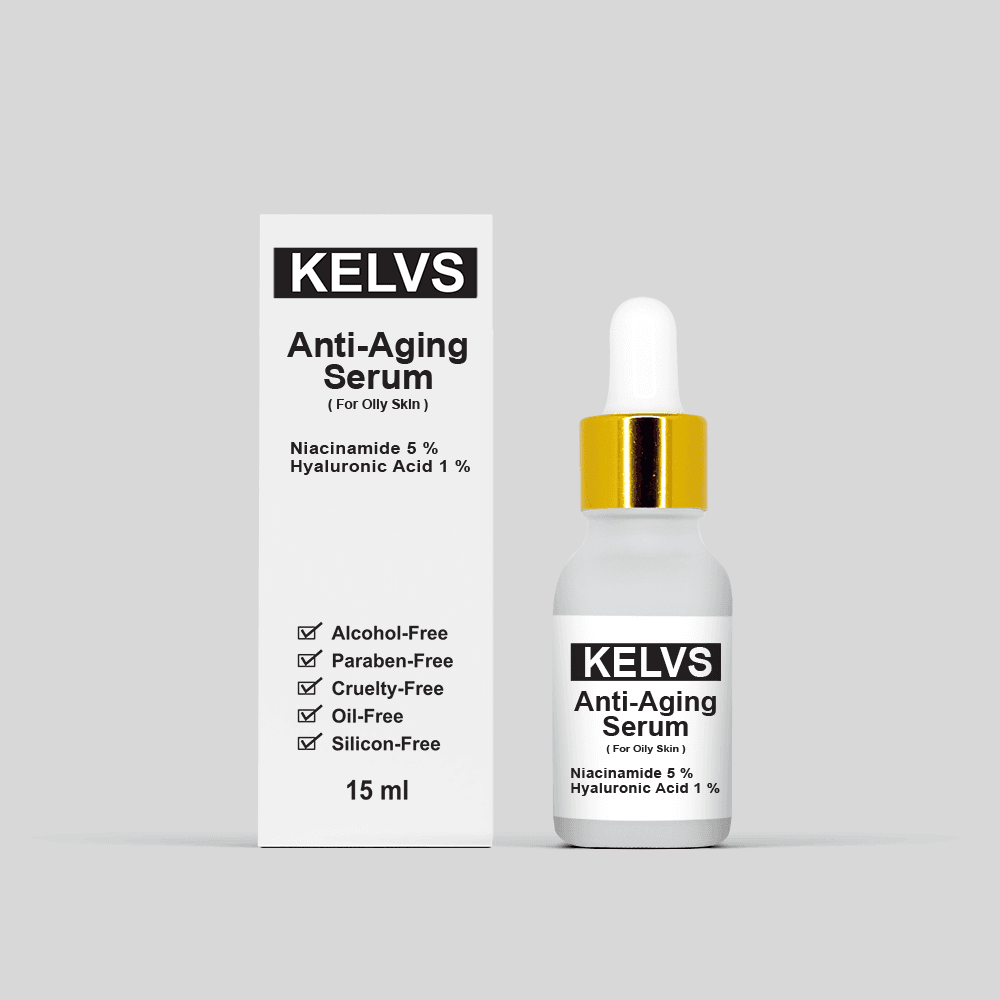
KELVS Niacinamide Serum is formulated at an effective concentration in a lightweight, water-based base — designed for twice-daily use on oily, acne-prone, and sensitive skin in Pakistan's climate. Its fragrance-free, non-comedogenic formulation makes it appropriate for use during active acne phases as well as in maintenance routines. Apply after cleansing, before moisturiser, morning and evening.
Niacinamide for Oily Skin
Oily skin in Pakistan is often a more complex problem than it appears. A significant proportion of people who describe their skin as persistently oily are experiencing sebum overproduction that has been driven by a compromised or dehydrated barrier — the skin compensates for moisture loss by producing more oil. This means the correct intervention for oily skin is frequently barrier support as much as oil control, and niacinamide provides both simultaneously.
Over eight to twelve weeks of consistent twice-daily use, niacinamide produces measurable reductions in sebum output and visible improvements in shine and pore appearance. Unlike astringent toners, alcohol-based products, and aggressive cleansers — all commonly used for oiliness in Pakistan — niacinamide achieves oil control without dehydrating the skin or disrupting the barrier, which means the oiliness does not rebound after the product is discontinued.
For oily skin in Karachi, Hyderabad, Multan, and other humid cities, a lightweight niacinamide serum applied under a non-comedogenic, oil-free moisturiser and mineral sunscreen provides oil control, barrier support, and UV protection in a three-product morning routine that does not feel heavy or occlusive in high-humidity conditions.
Niacinamide for Large Pores
Pore size is fundamentally a genetic characteristic — pores do not permanently enlarge or shrink regardless of which products are used. What does change is how visible pores appear, and niacinamide influences this through two mechanisms: reducing the sebum and congestion that makes pores look larger when filled, and improving the texture and elasticity of the surrounding skin through barrier support and hydration.
With consistent use over eight to twelve weeks, most users notice a visible reduction in the appearance of pores — particularly on the nose, cheeks, and chin, where sebaceous gland density is highest. This improvement is real but not permanent: discontinuing niacinamide allows sebum production and pore congestion to return to baseline over time.
Niacinamide for Sensitive Skin
Niacinamide at 2 to 5 percent is one of the most widely tolerated cosmetic actives for sensitive and reactive skin. Its anti-inflammatory action directly reduces the reactive episodes that characterise sensitive skin, its barrier-stimulating action improves the tolerance threshold of compromised skin, and its complete absence of photosensitisation means it does not add UV-related irritation risk to already-reactive skin.
For Pakistani users with skin sensitised by formula cream use, extended acne treatment, or over-exfoliation, niacinamide is frequently the first active that can be safely introduced into a rebuilding routine — often before alpha arbutin, vitamin C, or retinoids, which require more established barrier stability before introduction.
Niacinamide for Skin Barrier Repair
The skin barrier — the outermost lipid matrix of the stratum corneum — is the foundation of all skin health. When it is compromised, every other skin concern worsens: acne becomes more severe, sensitivity increases, pigmentation from inflammation is more pronounced, and products that would otherwise be beneficial become irritating.
Niacinamide's ceramide-stimulating action makes it one of the few cosmetic actives that actively repairs the barrier rather than simply avoiding further damage to it. Over consistent use, it measurably increases ceramide levels in the stratum corneum, improving moisture retention, reducing trans-epidermal water loss, and restoring the barrier's capacity to filter irritants and regulate the microbiome. This is why niacinamide is valuable not just for skin that is currently experiencing barrier problems, but as a long-term maintenance ingredient for skin that has been stabilised and needs to stay that way.
Niacinamide vs Alpha Arbutin
Niacinamide and alpha arbutin are two of the most frequently paired brightening ingredients in modern skincare routines — and understanding the distinction between them makes it easy to see why they work so well together.
| Consideration | Niacinamide | Alpha Arbutin |
|---|---|---|
| Primary Brightening Mechanism | Inhibits melanosome transfer — reduces melanin reaching skin surface | Inhibits tyrosinase — reduces melanin production at source |
| Oil Control | Yes — reduces sebum production measurably | None |
| Barrier Repair Support | Active — stimulates ceramide synthesis directly | Neutral — does not disrupt or actively repair barrier |
| Acne-Specific Benefits | Strong — anti-inflammatory, oil-regulating, barrier-supporting | Supportive — helps fade post-acne PIH marks |
| Use Together? | Yes — recommended; they target two different stages of the same pigmentation pathway; apply niacinamide first, then alpha arbutin | |
When to use each: Use niacinamide as your primary active when oil control, barrier repair, acne management, and redness reduction are the main priorities. Use alpha arbutin as the primary brightening active when targeted pigmentation fading — acne marks, sun spots, melasma support — is the main priority. When both concerns are present simultaneously, use both in the same routine.
Full comparison guide: Alpha Arbutin vs Niacinamide — Can You Use Both Together?
Niacinamide vs Vitamin C
| Consideration | Niacinamide | Vitamin C (L-Ascorbic Acid) |
|---|---|---|
| Primary Role | Barrier repair, oil control, anti-inflammatory, tone-evening | Antioxidant protection, secondary brightening, collagen support |
| Barrier Impact | Active barrier support — ceramide stimulation | Neutral to mildly disruptive at low pH on compromised skin |
| Sensitivity Risk | Low — well-tolerated on all skin types at 2–5% | Moderate — L-ascorbic acid at low pH causes stinging on sensitised skin |
| Stability in Pakistan's Heat | High — thermally stable; no special storage requirements | Moderate — L-ascorbic acid degrades in heat and light; requires careful storage |
| Can Be Used Together? | Yes — vitamin C in the morning for antioxidant UV defence; niacinamide morning and/or evening for barrier and oil control. Direct same-step mixing of L-ascorbic acid and niacinamide may cause mild flushing in some users; use sequentially with absorption time between each, or use a stable vitamin C derivative | |
Routine differentiation: Niacinamide's value is consistent across morning and evening use — barrier support and oil control are needed in both sessions. Vitamin C's primary benefit is its morning antioxidant defence against daytime UV and pollution. The two can be used in the same morning routine with a 60-second absorption interval, or vitamin C can be reserved for morning and niacinamide used in both morning and evening sessions.
How to Use Niacinamide Serum
Niacinamide is a water-soluble active applied after cleansing and before moisturiser. It is compatible with the vast majority of other skincare ingredients — one of the practical reasons it integrates so easily into existing routines.
Layering Order
- Gentle cleanser
- Niacinamide serum — applied to clean skin as the first serum step
- Additional serums if using (e.g., alpha arbutin applied after niacinamide has absorbed)
- Moisturiser — ceramide-rich, fragrance-free
- Mineral sunscreen SPF 30+ (morning only)
Apply 2 to 3 drops of niacinamide serum to clean, slightly damp skin. Press gently — do not rub. Allow 60 seconds for absorption before applying the next product. This absorption window matters: applying a second serum or moisturiser too quickly over niacinamide reduces the amount of active ingredient that reaches the skin surface.
Morning Routine Example
- Gentle pH-balanced cleanser — lukewarm water; pat dry
- Niacinamide serum — 2 to 3 drops; press in; 60 seconds absorption
- Alpha arbutin serum (if addressing pigmentation simultaneously) — allow 60 seconds after niacinamide
- Lightweight ceramide moisturiser — applied while skin is slightly damp
- Mineral sunscreen SPF 30 or above — final morning step; non-negotiable in Pakistan's UV environment
Evening Routine Example
- Double cleanse if wearing sunscreen — gentle oil cleanser or micellar water first; then pH-balanced face cleanser; single cleanse if no sunscreen worn
- Niacinamide serum — 2 to 3 drops on clean skin; 60 seconds absorption
- Alpha arbutin serum (if using) — applied after niacinamide absorption
- Ceramide moisturiser — slightly richer formula at night for overnight barrier support
Who Should Use Niacinamide?
- Acne-prone skin — niacinamide addresses three of the four primary drivers of acne: sebum excess, inflammation, and barrier compromise; suitable during active acne phases and for maintenance between breakout cycles
- Oily skin types — the most reliable non-prescription ingredient for sustained sebum reduction without barrier disruption; particularly valuable in Pakistan's heat and humidity
- Sensitive and reactive skin — anti-inflammatory and barrier-repairing properties make niacinamide one of the gentlest effective actives for calming and stabilising reactive skin
- Barrier-damaged skin — those recovering from whitening cream damage, steroid cream withdrawal, over-exfoliation, or any other barrier-disrupting history; niacinamide's ceramide stimulation actively repairs barrier integrity over consistent use
- Anyone seeking uneven tone improvement — melanin transfer inhibition gradually fades post-acne marks and diffuse pigmentation over eight to twelve weeks of consistent use
- Anyone in Pakistan's climate year-round — stable in heat, no photosensitisation, no storage concerns; one of the most climate-practical actives available for Pakistani users
Who Should Avoid Niacinamide?
Niacinamide is among the best-tolerated cosmetic ingredients and has very few contraindications. However, a small number of considerations apply:
- Confirmed niacinamide sensitivity — a very small proportion of users experience contact dermatitis or persistent redness from niacinamide. If a patch test on the inner arm over five to seven days produces redness, stinging, or irritation, niacinamide is not suitable for that individual's skin and should not be continued.
- Concentrations above 10% — niacinamide above 10 percent can cause transient flushing in some users due to conversion to nicotinic acid in the skin. Cosmetic formulations are typically 2 to 5 percent, where this effect is not clinically significant. Avoid unusually high-concentration niacinamide products marketed for their extreme strength — the incremental benefit does not justify the increased reaction risk.
- Overuse within a heavily active routine — niacinamide is not inherently harmful when used alongside other actives, but placing it in a routine that also contains daily retinol, multiple AHAs, and high-concentration vitamin C means any reaction that occurs is difficult to attribute to a specific ingredient; introduce niacinamide into a simplified routine to assess tolerance clearly before layering additional actives.
How Long Niacinamide Takes to Work
| Timeframe | What to Expect | Primary Mechanism Active |
|---|---|---|
| Weeks 1 to 2 | Skin feels calmer; redness may reduce noticeably; oily skin may show early reduction in shine; no visible pore or pigmentation change yet | Anti-inflammatory action establishes quickly; sebum modulation begins |
| Weeks 3 to 4 | Clearer reduction in visible shine on oily skin; fewer reactive episodes on sensitive skin; some improvement in redness; early texture improvement | Sebum reduction accumulating; barrier ceramide synthesis supporting hydration improvement |
| Weeks 5 to 8 | Visible improvement in pore appearance; measurable reduction in acne frequency; skin texture notably smoother; tone beginning to even | Full sebum modulation cycle complete; ceramide levels improved; melanin transfer inhibition accumulating |
| Weeks 8 to 12 | Significant overall skin improvement; post-acne marks visibly lighter; oil control sustained; barrier integrity demonstrably improved | All mechanisms mature; visible surface results reflect cumulative biological changes across multiple cell turnover cycles |
Niacinamide's anti-inflammatory benefit is the fastest-acting of its properties — some users notice reduced redness and calmer skin within the first week of use. Sebum reduction and pore improvement build over four to eight weeks. Tone improvement from melanin transfer inhibition is the slowest, typically requiring eight to twelve weeks of consistent use.
Common Mistakes When Using Niacinamide
- Using too high a concentration — selecting a 10% or higher niacinamide product for the belief that stronger produces better results; 4 to 5% niacinamide delivers the evidence-backed benefits for oil control, barrier repair, and brightening; above 10%, flushing risk increases without proportional efficacy gain
- Layering too many actives simultaneously — introducing niacinamide alongside retinol, three serums, and high-concentration exfoliants in the first week; this makes it impossible to identify the cause of any reaction and creates a cumulative active load that frequently triggers the sensitivity being treated; introduce niacinamide into a simple routine and add further actives only after tolerance is confirmed
- Expecting overnight results — niacinamide's sebum modulation requires four to eight weeks of daily use; its tone-evening effects require eight to twelve; users who evaluate at two weeks and find no visible change are abandoning the ingredient before its primary result windows have opened
- Inconsistent application — niacinamide's ceramide-stimulating and sebum-modulating actions require continuous daily presence in the skin to accumulate; weekly or sporadic application does not produce the sustained biological changes that its clinical evidence documents; twice daily, every day, is the necessary commitment
Is Niacinamide Safe for Sensitive Skin?
Yes — and niacinamide is one of the specific ingredients that dermatologists recommend as a first active for people with sensitive or barrier-damaged skin, precisely because it supports the barrier rather than challenging it.
At 2 to 5 percent, niacinamide does not alter skin pH, does not exfoliate, and does not produce the photosensitisation that makes other actives risky on reactive skin. Its anti-inflammatory action actively reduces the reactivity of sensitised skin over consistent use — meaning the longer it is used, the better the skin's tolerance typically becomes, rather than degrading as it can with harsher actives.
For users recovering from whitening cream damage or steroid cream withdrawal — situations where the barrier is compromised and active ingredient tolerance is at its lowest — niacinamide at 2 to 4 percent is typically the first serum that can be introduced after a period of minimal-routine barrier stabilisation. It begins repairing the ceramide foundation of the barrier from the first weeks of use, progressively restoring the skin's tolerance for the additional actives that may be introduced later.
According to DermNet's clinical overview of niacinamide, it is one of the most broadly safe and well-tolerated cosmetic actives in dermatological practice, with documented benefit across all skin types including reactive, compromised, and clinically sensitive presentations.
Is Niacinamide Safe in Pakistani Weather?
Niacinamide is one of the most climate-practical active skincare ingredients available for Pakistani users. It is thermally stable across the temperature range experienced in Pakistan year-round — including the extreme heat of summer in Karachi, Multan, and interior cities — and does not require the careful cool storage that degrades ingredients like L-ascorbic acid vitamin C. It does not cause photosensitisation, meaning it does not increase UV vulnerability in Pakistan's high-UV environment.
For oily skin in high-humidity cities during summer, niacinamide's sebum-controlling action is particularly valuable — reduced oil production in high-humidity conditions decreases pore congestion, reduces acne frequency, and improves the comfort of wearing sunscreen over a niacinamide serum without the skin feeling excessively slick.
In dry winter conditions — including Lahore, Islamabad, and Peshawar winters — niacinamide's barrier-support action helps maintain skin hydration against the dehydrating effects of cold air, indoor heating, and hard water washing that make winter a particularly challenging season for barrier-compromised skin in Pakistan.
Frequently Asked Questions
Can I use niacinamide every day?
Yes. Niacinamide at 2 to 5 percent is safe for twice-daily use in both morning and evening routines, long-term and indefinitely. It does not require periodic breaks, does not accumulate irritation with extended use, and does not create dependency or rebound effects when discontinued. Consistent twice-daily use is, in fact, a requirement for achieving the sebum-reduction and barrier-repair effects that clinical studies document — intermittent use does not produce the same sustained biological changes.
What percentage of niacinamide is best?
For most cosmetic applications — acne, oil control, barrier repair, and tone improvement — 4 to 5 percent niacinamide represents the optimal balance between efficacy and tolerability. This is the concentration range at which clinical evidence for sebum reduction, anti-inflammatory action, and barrier improvement is strongest. Lower concentrations (2 to 3%) are appropriate for very sensitive or reactive skin during early routine building. Concentrations above 10 percent carry a higher flushing risk without proportionally better results for most skin types and are not necessary for independent cosmetic use.
Can niacinamide reduce acne?
Yes — niacinamide addresses acne through multiple mechanisms simultaneously: reducing sebum that provides substrate for acne-causing bacteria, lowering inflammatory activity that drives acne severity, strengthening the barrier that acne disrupts, and fading the post-acne marks that acne leaves behind. At 4 to 5 percent, niacinamide has been compared to topical antibiotic treatments for mild to moderate acne in clinical research, with the additional advantage of not contributing to antibiotic resistance. It is not a treatment for severe or cystic acne, which requires dermatological management.
Can niacinamide be used with vitamin C?
Yes. The concern that niacinamide and vitamin C cannot be combined is outdated and based on a misunderstanding of the chemistry involved. In practice, the conversion of niacinamide to nicotinic acid in the presence of L-ascorbic acid is minimal at the temperatures and concentrations used in cosmetic formulations and produces only mild, transient flushing in a very small proportion of users. The most practical approach for Pakistani users is to apply vitamin C in the morning with a brief absorption interval before applying niacinamide, or to use a stable vitamin C derivative (ascorbyl glucoside, sodium ascorbyl phosphate) that does not require a low-pH environment, making same-step application more straightforward.
Is niacinamide good for oily skin in Pakistan?
Yes — it is one of the most specifically appropriate ingredients for oily skin in Pakistan's climate. Niacinamide reduces sebum production without drying the skin or disrupting the barrier, which means it addresses oiliness at its source rather than temporarily masking it with astringents that rebound. In Pakistan's summer humidity, where excess sebum contributes to congestion, acne, and uncomfortable shine, twice-daily niacinamide use over four to eight weeks produces measurable and sustained oil reduction that improves not just appearance but also the overall environment within which acne develops.
Is niacinamide safe in Pakistani weather?
Yes — niacinamide is thermally stable, does not photosensitise, and requires no special storage precautions across Pakistan's temperature range. It is appropriate for year-round use including summer, without any adjustment in frequency or concentration based on season or climate zone. Paired with a mineral sunscreen SPF 30 or above applied every morning — the standard requirement for any active skincare routine in Pakistan's UV environment — niacinamide is among the safest and most climate-resilient active ingredients available for daily use in Pakistan.
The Case for Niacinamide in Pakistani Skincare
Skincare in Pakistan faces a particular challenge: a market full of aggressive products, a climate that taxes skin daily, and a widespread history of barrier damage from formula cream and steroid cream use that leaves a significant proportion of the population with sensitised, reactive, and compromised skin. Against this backdrop, the ideal skincare active is not the most powerful one available — it is the one that produces the broadest benefit with the least risk, that can be used consistently in a simplified routine, and that supports rather than challenges the skin's capacity to heal itself.
Niacinamide is that ingredient. It controls oil without dehydrating. It repairs the barrier without adding occlusive weight. It reduces acne without causing the photosensitisation or antibiotic resistance of conventional treatments. It improves tone without the harsh mechanisms that damage so many Pakistani skin types seeking the same outcome. And it does all of this in a climate-stable, fragrance-free formulation that can be used twice daily, year-round, across all skin types and ages.
It is not the most dramatic ingredient in skincare. It does not promise transformation in days. But used consistently and correctly, it delivers real, lasting, cumulative improvement to the skin concerns that matter most to the widest range of Pakistani users — and it does so without compromising the long-term health of the skin it is improving.
 Official
KELVS Anti Aging Serum | Minimizes Pores & Controls Oil
Scientifically formulated for maximum efficacy with zero harsh irritants. Restores skin balance, clears pores, and accelerates visible recovery.