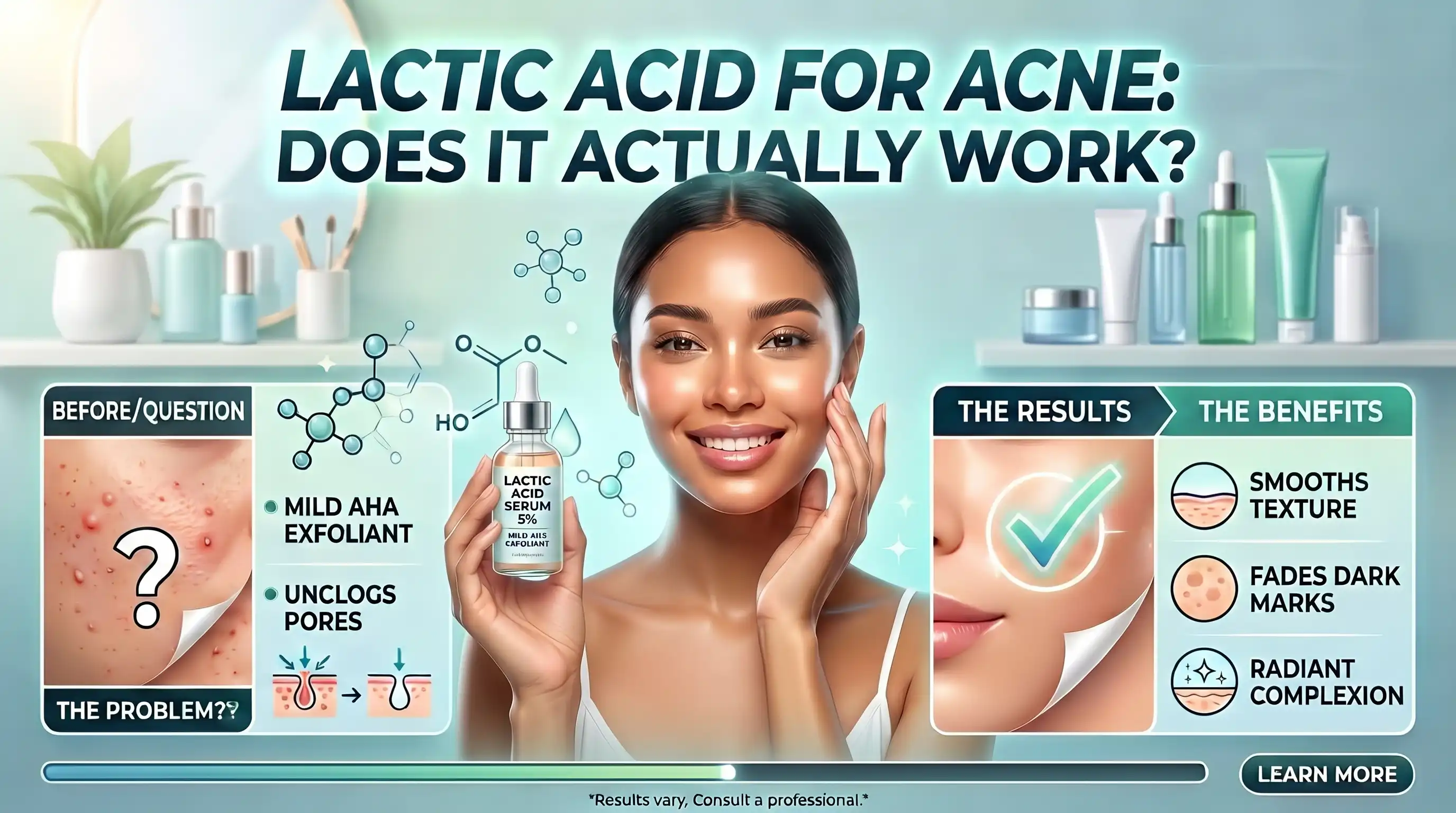
Lactic acid isn't the ingredient most people reach for first when dealing with acne — that's usually salicylic acid. But there is genuine, if limited, research on lactic acid specifically for acne
Introduction
When acne comes up, lactic acid usually isn't the first ingredient anyone mentions. Salicylic acid gets that spot, for good reason — it's oil-soluble and can work its way into the pore itself, where acne actually starts. So it's a reasonable question to ask whether lactic acid does anything meaningful for acne at all, or whether it's really just a texture-and-tone ingredient that happens to get mentioned in the same conversations.
 Official
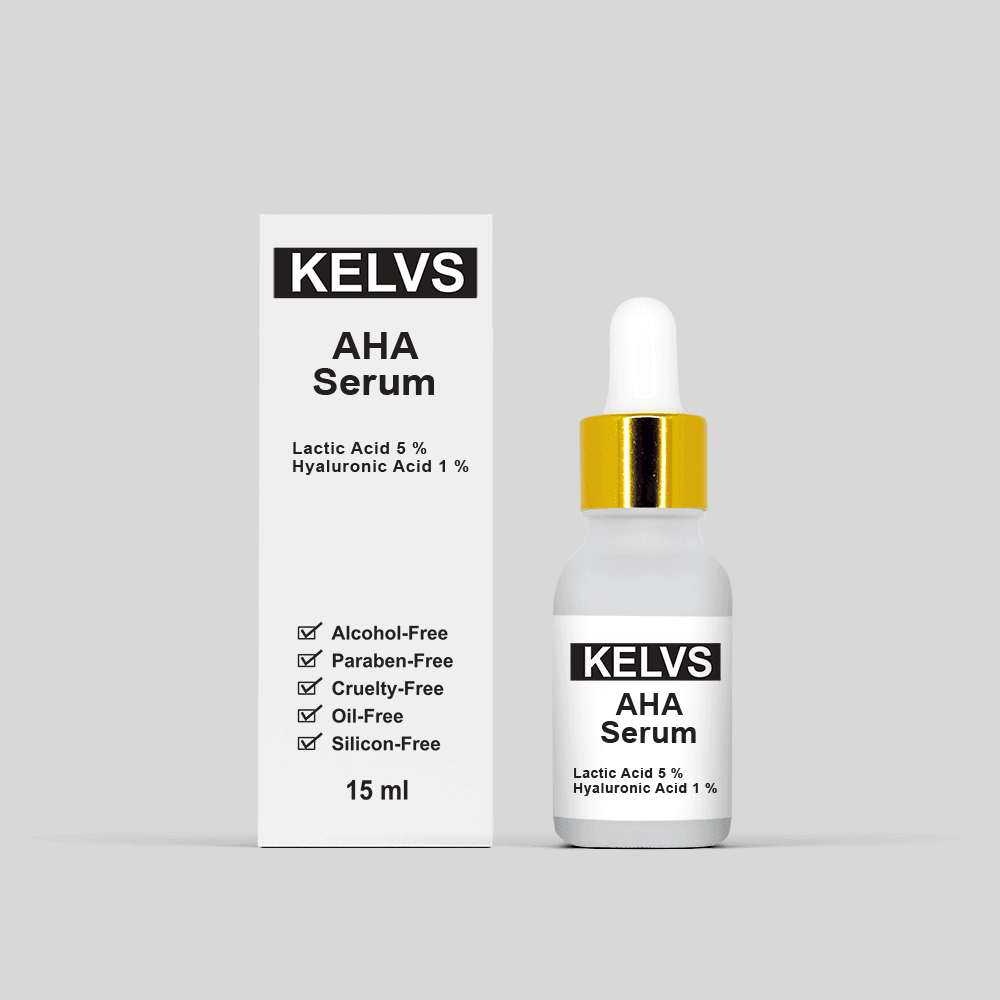
KELVS AHA Lactic Acid 5% Serum | Smooth Skin Texture & Even Tone
Scientifically formulated for maximum efficacy with zero harsh irritants. Restores skin balance, clears pores, and accelerates visible recovery.
The short answer: lactic acid does have a documented role in acne management, but it's a different role than salicylic acid's. Rather than clearing existing congestion inside the pore, lactic acid appears to work more as a long-term preventive measure — normalising the shedding process that leads to blocked follicles in the first place. There is actual clinical research behind this, including a study that ran for a full year, which is worth looking at directly rather than taking on faith.
How Acne Actually Forms, in Brief
Before getting into what lactic acid can or can't do, it helps to be clear on the actual mechanism behind a breakout. Acne begins inside the hair follicle, where dead skin cells that would normally shed away instead stick together and mix with sebum, forming a plug — a comedone. If that plug stays below the surface, it's a closed comedone (whitehead); if it opens to the surface, it's a blackhead. Left alone, some of these become colonised by bacteria and turn inflamed, becoming the papules and pustules most people think of as "acne."
This matters because it points to two different places an ingredient could intervene: preventing the abnormal cell-shedding that creates the plug in the first place, or breaking down a plug that has already formed. These are related but distinct jobs, and it's the second one — active, oil-soluble penetration into an existing clog — that lactic acid is not well suited for.
What the Research Actually Shows About Lactic Acid and Acne
 Official
KELVS BHA Salicylic Acid 2% Serum | Clear Pores & Fight Acne
Scientifically formulated for maximum efficacy with zero harsh irritants. Restores skin balance, clears pores, and accelerates visible recovery.
The clearest piece of evidence specifically on lactic acid and acne comes from a long-term clinical study published in the Indian Journal of Dermatology, Venereology and Leprology. In this study, patients with acne vulgaris applied a 5% lactic acid lotion to the entire face twice daily, and were followed for a full year. The researchers specifically framed it as testing lactic acid as a preventive treatment, rather than a fast-acting fix for existing breakouts — and the results supported that framing, with meaningful reductions in lesion counts sustained over the long study period.
What's notable about this study is both the concentration used — 5%, the same range used in typical over-the-counter serums today — and the timeline. This isn't a two-week trial. It's evidence that consistent, ongoing use of lactic acid at a moderate concentration can meaningfully reduce acne activity over time, even though its mechanism isn't the same "clear the clog" action associated with salicylic acid or benzoyl peroxide.
A broader review of exfoliating acids used in acne treatment, published in Skin Health and Disease, backs up this distinction at a mechanistic level. Alpha hydroxy acids like lactic acid are described as increasing epidermal turnover and having keratolytic properties — supporting the skin's own shedding process — while beta hydroxy acids like salicylic acid are specifically noted for being comedolytic and penetrating into the follicle itself. Both are hydroxy acids, but they're doing different jobs.
So Why Isn't Lactic Acid the First Choice for Acne?
Given that research above, it might seem like lactic acid should get more credit for acne than it usually does. The reason it still isn't the default recommendation comes down to speed and directness. Salicylic acid's oil solubility gives it access to the inside of an already-clogged pore, which tends to produce more visible improvement in active blackheads and whiteheads faster. Lactic acid's slower, surface-level, prevention-oriented mechanism is real, but it's a longer game — closer to reducing how many new blockages form over months, rather than clearing out the ones already there this week.
For a side-by-side breakdown of this exact distinction — surface exfoliation versus inside-the-pore action — see Lactic Acid vs Salicylic Acid: Which One Should You Use?.
Where Lactic Acid Genuinely Fits in an Acne Routine
Put together, the research points to a specific and realistic role for lactic acid in acne-prone skin:
- Long-term maintenance and prevention — consistent use, at a moderate concentration, appears to reduce how frequently new comedones and lesions form over months of use, based on the year-long study above.
- Post-acne texture and marks — separate from active breakouts, lactic acid's surface exfoliation helps smooth the rough texture and fade the dark marks that acne tends to leave behind once it heals.
- A gentler option for acne-prone skin that reacts badly to salicylic acid — some skin doesn't tolerate BHA well, particularly if it's already dry or sensitised; lactic acid's more moderate profile, plus its natural link to the skin's own moisture-retaining compounds, can make it a more comfortable long-term option for that skin type.
What it is not well suited for is fast, targeted action on an active blackhead or whitehead sitting on your skin right now — that is still salicylic acid's job, given its ability to actually get inside the follicle.
Can You Use Lactic Acid and Salicylic Acid Together for Acne?
Given that they're addressing acne from two different angles — prevention versus active pore clearing — combining them can make sense, but not layered together carelessly. Using them on alternating days, or one in the morning and one in the evening, lets you benefit from both mechanisms without stacking two exfoliating acids in the same session and overloading the skin. This is worth introducing gradually and only once you know how your skin tolerates each one individually.
What This Means for Acne Marks Specifically
A large share of what people call "acne problems" in Pakistan is actually the aftermath — the dark marks left behind once a breakout has healed, rather than the breakout itself. Preventing new lesions from forming matters for this too, since every new inflamed pimple is a chance for a fresh mark to appear. Lactic acid's dual role — some preventive benefit against new lesions, plus surface exfoliation that helps fade existing marks — makes it a reasonable addition to a marks-focused routine, ideally alongside a more targeted brightening ingredient. See Niacinamide for Dark Spots and Hyperpigmentation: Does It Really Work? and Does Alpha Arbutin Work for Post-Acne Dark Marks? for ingredients more directly built for that job.
For managing the acne itself alongside marks, Niacinamide for Acne-Prone Skin: Does It Work and How Fast? is a useful companion piece, since niacinamide addresses oil and inflammation through yet another mechanism entirely.
A Word of Caution on Whitening Creams and Acne in Pakistan
It's worth flagging that a meaningful amount of "acne" seen on Pakistani skin isn't ordinary acne vulgaris at all, but a steroid-related breakout pattern caused by harsh whitening or "fairness" creams. This type of breakout doesn't respond to lactic acid, salicylic acid, or any standard acne ingredient the way genuine acne does, because the underlying cause is different. If breakouts appeared or worsened after starting a whitening cream, that's worth addressing directly — see Steroid Cream Damage on Face: Symptoms, Treatment and Recovery and Side Effects of Formula Creams on Face before assuming a standard acid-based routine will fix it.
How to Use Lactic Acid If Acne Prevention Is Your Goal
- Use a moderate concentration — around 5%, in line with what the long-term clinical study actually tested — rather than assuming a stronger product will work faster
- Apply consistently, on clean skin, followed by a non-comedogenic moisturiser
- Think in months, not days — the evidence for lactic acid's preventive effect on acne comes from sustained use over a long period, not a quick trial
- Use sunscreen daily, since exfoliating acids increase sun sensitivity regardless of which one you choose
- If active congestion or inflamed breakouts are the main issue right now, don't expect lactic acid alone to resolve them quickly — that's a better fit for salicylic acid, used alongside lactic acid rather than instead of it
The KELVS AHA Serum is formulated at 5% lactic acid with added hyaluronic acid — a concentration in line with the research above, designed for the kind of consistent, long-term use that lactic acid's preventive role in acne actually depends on, without the added dryness that a higher, more aggressive concentration could bring to already acne-prone skin.
Conclusion
Lactic acid does have a real, evidence-backed role in acne management — just not the one most people assume. It isn't the fast-acting, pore-clearing ingredient that salicylic acid is, and it shouldn't be marketed or used as one. What a year-long clinical study does support is a slower, preventive effect: consistent use of a moderate-strength lactic acid product appears to reduce how often new lesions form over time, alongside its separate, well-established benefit for smoothing texture and fading the marks acne leaves behind. Used with that realistic expectation — as a long-term maintenance ingredient rather than a spot treatment — lactic acid earns a genuine, if supporting, place in an acne routine.