Lactic Acid Benefits for Skin: What Does It Actually Do?
Waleed
21 Aug 2026

Lactic acid is credited with an unusually long list of skin benefits — some genuinely well-supported by clinical evidence, others repeated so often in marketing copy. This guide goes through each claimed benefit individually
Buy Our Lactic Acid
Introduction
Search for lactic acid benefits and you will find lists — usually numbered, usually somewhere between seven and fifteen items long — claiming it exfoliates, brightens, hydrates, fights aging, fades scars, reduces pores, evens tone, smooths texture, treats acne, and occasionally even claims to have properties with little to no supporting mechanism at all. Some of these are genuinely well-documented in clinical literature. Others are repeated so consistently across skincare marketing that they have taken on the appearance of established fact without the evidence to match.
This article does not add another number to that list. It goes through the benefits most consistently attributed to lactic acid, one at a time, and asks the same question of each: what is the actual mechanism, what does the evidence show, and how large or reliable is the effect in practice. Some benefits hold up well under this scrutiny. Others are real but more modest than marketing suggests. The goal is a realistic picture you can use to set actual expectations — not a longer list.
Exfoliation: Well-Supported, and the Foundation of Everything Else
This is the one claim about lactic acid that requires the least scrutiny, because it is the mechanism the rest of its effects are built on rather than a separate claimed benefit. Lactic acid, in its free acid form at an appropriately low pH, dissolves the desmosomal bonds holding dead corneocytes together at the skin's surface, accelerating their shedding. This is directly measurable — corneometry and other objective skin-surface assessment methods consistently show increased desquamation rate with topical lactic acid application, and the effect is dose-dependent on both concentration and pH.
What is worth being precise about: this is surface-level exfoliation, not a mechanism that reaches or restructures the dermis. It removes what is already on the surface faster than natural turnover would. It does not "detoxify" skin, does not "unclog" pores in a way meaningfully different from what regular gentle cleansing achieves, and does not accelerate healing of active inflammatory lesions. The exfoliation claim is solid; some of the downstream claims occasionally attached to it are not.
Smoother Texture: Well-Supported and Visible Relatively Quickly
Texture improvement is one of the more reliably visible and reasonably fast-appearing benefits of consistent lactic acid use, and it follows fairly directly from the exfoliation mechanism above. Removing the accumulated layer of adherent dead cells reveals a surface that is objectively more uniform — fewer micro-irregularities for light to scatter across unevenly, which is what produces the "smoother" and often "more radiant" appearance users report.
Clinical studies specifically on keratosis pilaris — the rough, bumpy "chicken skin" texture common on the upper arms and thighs, caused by keratin plugs at hair follicle openings — have shown meaningful improvement with topical lactic acid and ammonium lactate formulations, making this one of the better-evidenced specific texture applications rather than a vague generalisation. For general facial texture — rough patches, visible pore texture, minor unevenness from accumulated dead skin — the improvement is real but more modest and requires several weeks of consistent use rather than a single application producing a dramatic before-and-after.
What is worth tempering: texture improvement from lactic acid is a surface effect that requires maintenance. It is not a permanent correction — skin cell turnover continues at its baseline rate once lactic acid use stops, and any underlying tendency toward rough texture (genetic keratosis pilaris, for instance) returns without ongoing use.
Hyperpigmentation Support: Real, But More Modest Than Often Presented
This is one of the benefits where the gap between the marketing claim and the underlying evidence is worth examining carefully, because lactic acid is frequently marketed as a "brightening" or "dark spot" ingredient in language that implies a strength closer to dedicated depigmenting actives than what the evidence actually supports.
Lactic acid contributes to pigmentation improvement through two mechanisms. The first — and the larger contributor — is exfoliation itself: melanin-laden cells at the surface are removed faster, so existing surface pigmentation fades somewhat faster than it would through natural turnover alone. The second is a modest, directly measured inhibitory effect on tyrosinase, the enzyme responsible for melanin synthesis. This second effect has been documented in in-vitro and some clinical studies, but the magnitude is meaningfully smaller than the tyrosinase inhibition produced by dedicated depigmenting actives such as alpha arbutin, kojic acid, or hydroquinone.
The honest positioning is this: lactic acid is a genuinely useful supporting ingredient for pigmentation management, particularly for diffuse, surface-level unevenness and mild post-acne marks, and it is a reasonable component of a broader pigmentation routine. It is not a substitute for a dedicated tyrosinase-inhibiting active if significant, established, or deep pigmentation is the primary concern — claims implying lactic acid alone will meaningfully fade established dark spots or melasma are overstating what the mechanism supports.
For pigmentation-specific guidance: Lactic Acid for Pigmentation and Dark Spots — Pakistan Guide.
Fine Lines and Photodamage Appearance: Real, Slow, and Frequently Overstated in Timeline
This is the benefit category where marketing timelines diverge most significantly from clinical reality. Lactic acid, like other AHAs, has been shown in controlled studies to stimulate fibroblast activity in the dermis over sustained use, increasing collagen and glycosaminoglycan production, and to produce measurable improvement in fine line depth and skin thickness with regular application over a period of months.
The key qualifier is "over a period of months." Studies demonstrating collagen-related improvements from AHAs, including lactic acid, generally measure outcomes at 12 weeks or later — several studies extend to six months to capture the full effect. Marketing copy that implies visible anti-aging results within one or two weeks is describing the surface exfoliation and hydration effect (real, and fast) rather than the structural collagen effect (also real, but considerably slower). Both effects genuinely occur; conflating their timelines misrepresents what a new user should expect to see and when.
For photodamage specifically — the accumulated texture, pigmentation, and fine-line changes from cumulative UV exposure — lactic acid's combined exfoliation, mild pigmentation, and collagen-stimulating effects make it a reasonable component of a photodamage-improvement routine, but it works as one contributor among several (sunscreen, other actives, time) rather than as a standalone solution, and its contribution to established, deep photodamage is more supportive than corrective.
Dry and Rough Skin: One of Lactic Acid's Genuinely Strongest and Most Distinctive Benefits
This is the claim category with the least gap between marketing and evidence, and arguably lactic acid's most clinically distinctive property relative to other AHAs. Because lactic acid is a natural constituent of the skin's own natural moisturising factor, its topical application does something most other exfoliating acids do not: it directly and measurably increases stratum corneum water content, independent of and in addition to its exfoliating action.
This has been specifically studied and clinically applied in the treatment of very dry, scaly skin conditions — ammonium lactate formulations at 12% are an established, dermatologist-prescribed treatment for ichthyosis and severe xerosis (pathologically dry skin), with documented improvement in both scaling and hydration that goes beyond what pure exfoliation would explain. At cosmetic concentrations, the same underlying mechanism applies at a smaller scale: lactic acid exfoliates the dry, flaking surface layer while simultaneously contributing humectant activity that other AHAs (notably glycolic acid) do not provide.
This is the benefit area where lactic acid's claims are least likely to be overstated, and it is the primary reason lactic acid — rather than a stronger AHA — is the more clinically appropriate choice specifically for dry, rough, or dehydrated skin types seeking chemical exfoliation.
Hydration-Related Effects Beyond Dryness: Worth Separating From the Dry-Skin Claim Above
It is worth distinguishing "lactic acid helps dry skin" (well-supported, addressed above) from a broader and vaguer claim sometimes made — that lactic acid generally "boosts hydration" for all skin types as a headline benefit independent of dryness. The humectant mechanism is the same regardless of skin type, but its practical relevance differs: for skin that is not dry or dehydrated, the incremental hydration contribution from lactic acid is real but minor compared to its exfoliation effect, and framing hydration as a primary, universal benefit for all users somewhat overstates its role outside the dry-skin context. The accurate framing is that lactic acid's humectancy is a genuine, useful, and somewhat unique property among AHAs — most relevant and most noticeable specifically for those with dry or compromised-barrier skin, rather than a headline benefit for oily or normal skin types already producing adequate natural hydration.
Body Texture: Well-Evidenced for a Specific and Common Use Case
Lactic acid's application to body skin — arms, legs, elbows, knees — deserves separate mention because the evidence here is specific and strong, even though it is less discussed than facial applications. Keratosis pilaris, rough patches on the outer arms and thighs, and general body skin roughness respond well to lactic acid and ammonium lactate formulations, and this is one of the more established dermatological uses of the ingredient, with prescription-strength ammonium lactate lotions specifically indicated for this purpose.
Body skin generally tolerates higher concentrations than facial skin because it has a thicker stratum corneum and, in most areas, less exposure to the multiple concurrent actives that a facial routine often involves. Cosmetic lactic acid body lotions in the 10 to 15% range, used consistently, produce measurable improvement in the rough, bumpy texture that is otherwise difficult to meaningfully improve with physical exfoliation or moisturiser alone.
What This Leaves Out — And Why
Several claims occasionally attached to lactic acid are not addressed above because the evidence supporting them as lactic-acid-specific effects is weak, indirect, or largely absent from controlled clinical literature: claims that lactic acid "shrinks pores" (pore size is anatomically fixed; what improves is the appearance of congestion, which is the same texture mechanism already discussed, not a separate pore-shrinking effect), claims that it "clears acne" (lactic acid can support a mild reduction in surface congestion but is not established as an acne treatment in the way BHA or benzoyl peroxide are), and claims that it functions as a general "anti-inflammatory" (unlike niacinamide, lactic acid does not have a well-documented anti-inflammatory mechanism, and applying an acid to actively inflamed skin can worsen rather than calm it). These are common enough in product marketing to be worth explicitly flagging as claims the current evidence does not clearly support in the way the other benefits above do.
A Realistic Summary
| Claimed Benefit | Evidence Strength | Realistic Expectation |
|---|---|---|
| Exfoliation / cell turnover | Strong — direct, measurable mechanism | Reliable with consistent, correctly-formulated use |
| Smoother texture | Strong, especially for keratosis pilaris | Visible within 2–6 weeks; requires maintenance |
| Hyperpigmentation | Moderate — real but smaller effect than dedicated actives | Supportive role; not a standalone solution for deep pigmentation |
| Fine lines / photodamage | Moderate — real collagen effect, slow timeline | 3–6 months for structural change; faster surface-level softening |
| Dry / rough skin | Strong — distinctive humectant mechanism | One of lactic acid's best-supported and most distinctive uses |
| General hydration (non-dry skin) | Weak as a standalone headline benefit | Real but minor; secondary to exfoliation for most users |
| Body texture (KP, rough patches) | Strong — established dermatological use | One of the most reliably evidenced applications |
| Pore size, acne treatment, anti-inflammatory | Weak / not well supported | Treat these specific claims with scepticism |
Conclusion
Lactic acid does not need an inflated list of benefits to be worth using — the well-supported effects are substantial on their own: reliable exfoliation, genuine texture improvement, a real and distinctive contribution to hydration that most other AHAs lack, meaningful body-skin texture benefits, and a modest but real contribution to pigmentation and fine-line improvement over time. What it is not is a fast, dramatic, all-purpose fix for pores, active acne, or established deep pigmentation — claims that appear in marketing more often than they appear in the clinical literature behind them.
Used with accurate expectations, at an appropriate concentration and pH, introduced gradually, and always paired with daily sunscreen, lactic acid earns its reputation as one of the more genuinely useful actives in skincare — on the strength of what it actually does, not what it is sometimes said to do.
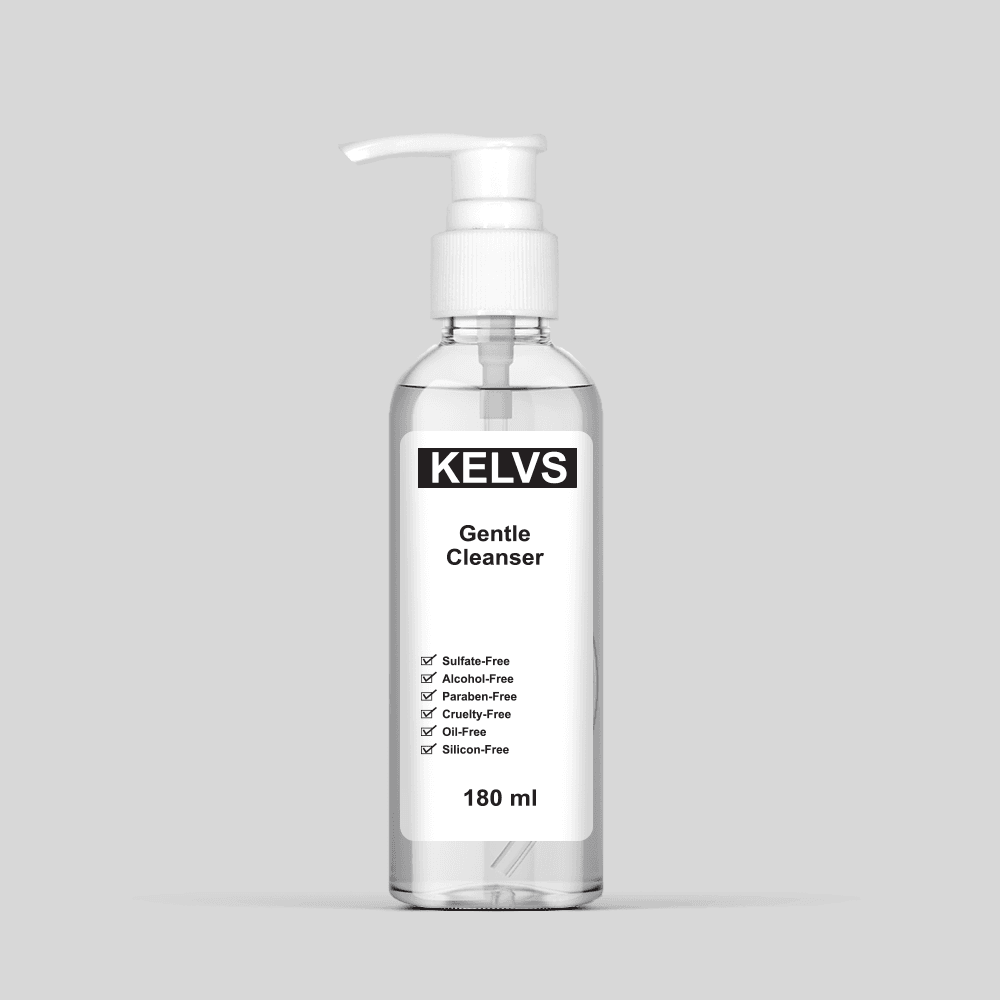 Official
KELVS Gentle Cleanser | Sulfate-Free Daily Cleanse
Scientifically formulated for maximum efficacy with zero harsh irritants. Restores skin balance, clears pores, and accelerates visible recovery.