Salicylic Acid for Blackheads and Whiteheads: The Complete Guide
Waleed
12 Oct 2026
Struggling with clogged pores? Discover how salicylic acid (BHA) safely and effectively clears blackheads and whiteheads. Learn the science, how to use it, and expert tips for a smooth, clear complexion
Staring in the mirror and noticing tiny bumps on your nose, chin, or forehead is a frustrating experience we have all been through. Whether they are dark, stubborn dots or flesh-colored bumps that ruin the smooth texture of your skin, clogged pores are incredibly common.
The good news? You do not need harsh scrubs or expensive clinic treatments to fix them. The secret lies in understanding exactly what these bumps are and using the right chemical exfoliant to dissolve them. Enter Salicylic Acid (BHA), the gold-standard, dermatologist-recommended ingredient for clearing clogged pores.
In this guide, we break down the science of blackheads and whiteheads, explain how salicylic acid clears them from the inside out, and provide a clear routine to get smooth, clear skin.
What Are Comedones? (The Umbrella Term for Clogged Pores)
Before we talk about treatments, we need to know what we are treating. In dermatology, the medical term for a clogged pore is a comedo (plural: comedones).
A comedone is simply a hair follicle (pore) that has become blocked with a mixture of excess sebum (oil) and dead skin cells. Comedones are the earliest stage of acne. Because they are not yet inflamed or infected by bacteria, they generally do not hurt or turn red—they simply create rough texture. All blackheads and whiteheads are types of comedones.
Blackheads vs. Whiteheads: What is the Difference?
While both are comedones, they behave differently based on one simple factor: whether the pore opening is open or closed to the air.
Blackheads (Open Comedones)
A blackhead is a clogged pore where the top remains open to the surface. Myth Buster: The dark color is not trapped dirt, and it does not mean your face is unwashed. The darkness is caused by oxidation. When the trapped mixture of sebum and dead skin cells contacts oxygen in the air, the melanin oxidizes and turns black—just like a freshly sliced apple turning brown when exposed to air.
Whiteheads (Closed Comedones)
A whitehead is a clogged pore where the opening is sealed by a microscopic layer of skin cells. Because oxygen cannot reach the trapped sebum and dead cells, oxidation never happens. Instead, it remains a small, flesh-colored or yellowish bump beneath the surface that makes skin feel bumpy and uneven.
Quick Comparison
| Feature | Blackhead (Open Comedo) | Whitehead (Closed Comedo) |
|---|---|---|
| Pore Surface | Open to the air | Covered by a thin layer of skin |
| Appearance | Dark, flat or slightly raised speck | Flesh-colored, white, or yellowish bump |
| Cause of Color | Oxidized sebum & melanin (not dirt) | Trapped unoxidized sebum & keratin |
| Best Solution | Oil-soluble BHA (Salicylic Acid) | Oil-soluble BHA + gentle cell turnover |
Why Do Pores Get Clogged in the First Place?
Pores do not clog randomly. It is usually a combination of four main factors working together:
- Excess Sebum (Oil): Hormones, genetics, or humidity can cause your sebaceous glands to overproduce oil.
- Abnormal Desquamation (Sticky Skin Cells): In acne-prone skin, dead skin cells shed abnormally and clump together instead of naturally falling away.
- Sweat and Friction: Trapped sweat from workouts, tight headwear, or resting your face on your hands can press debris deeper into the follicular canal.
- Comedogenic Formulations: Heavy mineral waxes, comedogenic oils, or occlusive hair products can physically cap the pore opening.
How Salicylic Acid Actually Clears Clogged Pores
Physical scrubs (like apricot or walnut scrubs) and pore strips only scrape the surface and can cause micro-tears or stretch pore openings. Salicylic acid works entirely differently by solving the blockage at its root.
1. It is Oil-Soluble (Lipophilic)
Unlike Alpha Hydroxy Acids (AHAs like glycolic or lactic acid) which are water-soluble and work primarily on the skin's surface, Salicylic Acid is a Beta Hydroxy Acid (BHA) that is lipophilic (oil-soluble). It penetrates through surface facial oils directly into the sebum-filled pore lining.
2. It Dissolves the "Glue" (Keratolytic Action)
Salicylic acid is a keratolytic agent: it breaks down the desmosomes (the intercellular protein bonds) binding dead skin cells together. Once this cellular glue is broken down, trapped debris loosens and naturally purges from the pore.
3. It Calms Irritation
Derived historically from willow bark and structurally related to aspirin, salicylic acid has inherent anti-inflammatory properties that calm the pore lining and reduce minor swelling around clogs.
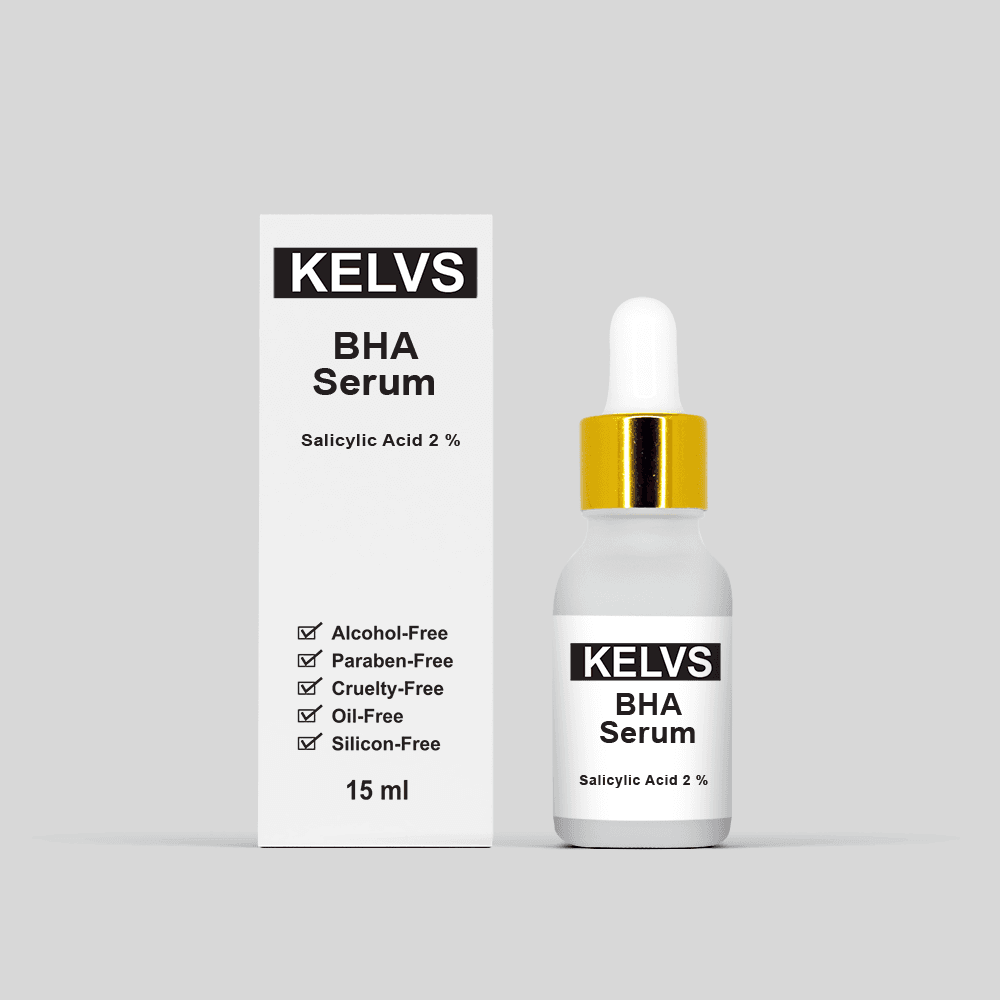 Official
KELVS BHA Salicylic Acid 2% Serum | Clear Pores & Fight Acne
Scientifically formulated for maximum efficacy with zero harsh irritants. Restores skin balance, clears pores, and accelerates visible recovery.
How to Use Salicylic Acid Safely in Your Routine
Step 1: Choose an Effective Formulation
Look for an over-the-counter leave-on serum with 0.5% to 2% Salicylic Acid (such as Kelvs BHA Salicylic Acid 2% Serum). Formulated to release Salicylic acid slowly to deliver the deep pore exfoliation without Causing irritation or stripping the skin.
Step 2: Start Slow (Frequency)
Begin by applying your BHA 2 to 3 evenings per week after cleansing. If your skin exhibits no redness or tightness after two weeks, you can slowly increase frequency to every other evening, or daily for oilier skin types.
Step 3: Pair With Barrier-Supporting Actives
- Hyaluronic Acid / Vitamin B5: Attracts hydration to prevent trans-epidermal water loss (Kelvs Hydration Serum).
- Niacinamide: Balances sebum output and minimizes the appearance of stretched pores (Kelvs Niacinamide Serum).
- Ceramides & Squalane: Reinforce the stratum corneum to prevent irritation.
Step 4: Always Use Sunscreen
Chemical exfoliation accelerates skin renewal, making newly surfaced skin cells more vulnerable to UV rays. Apply a broad-spectrum SPF 30+ every single morning to prevent hyperpigmentation and post-inflammatory dark spots.
Purging vs. Breakouts: What to Expect
When you start using salicylic acid, you may experience skin purging during the first 2 to 4 weeks. Because BHA speeds up cellular turnover, microcomedones that were already forming deep in your pores will surface all at once. This is completely normal and indicates the product is unclogging the pore lining. True purging occurs in areas where you normally get clogged pores and subsides within a few weeks; if you experience redness, burning, or breakouts in areas where you never break out, pause usage and let your moisture barrier recover.
Who Should Be Cautious?
- Extremely Dry or Sensitive Skin: If leave-on serums cause peeling, switch to a wash-off gentle cleanser or rinse-off BHA treatment.
- Pregnancy & Nursing: While low-concentration topical BHAs are generally considered low risk, always check with your obstetrician before introducing active treatments.
- Layering Actives: Avoid applying salicylic acid at the exact same time as potent Retinoids or pure L-Ascorbic Acid (Vitamin C). Alternate them across separate nights to prevent barrier compromise.
Frequently Asked Questions (FAQ)
How long does it take for salicylic acid to clear blackheads?
Most individuals notice refined skin texture within 1 to 2 weeks. Substantial clearance of blackheads and closed comedones typically takes 4 to 6 weeks of consistent use, matching the natural 28-day skin turnover cycle.
Can I pop or extract whiteheads after applying BHA?
No. Mechanical squeezing traumatizes surrounding tissue and risks forcing bacterial debris deeper into the dermis, resulting in inflammatory cysts or scarring. Allow the keratolytic action of the acid to loosen the plug naturally.
Does salicylic acid help cystic acne?
Salicylic acid is most effective for non-inflammatory comedonal acne (blackheads and whiteheads). Deep cystic lesions develop deep in the dermis and are fueled by hormones and deep bacterial colonies; these typically require evaluation by a dermatologist for targeted oral or prescription topical therapies.
Scientific References
1. Liu, Y. (2025). Clinical Efficacy of a Salicylic Acid-Containing Gel on Acne: Sebum Regulation and Barrier Enhancement. Journal of Cosmetic Dermatology.
2. Journal of Drugs in Dermatology (2025). Novel 2% Salicylic Acid Cleanser With Polymeric Cleansing Technology Treats Acne Without Compromising Skin Barrier.
3. American Academy of Dermatology (AAD). (2024). Guidelines of Care for the Management of Acne Vulgaris: The Role of Topical Beta Hydroxy Acids.
4. Veronica, A.D. (2026). The Comprehensive Systematic Review of Effectiveness and Safety of Salicylic Acid for Comedonal Acne. International Journal of Medical and Health Sciences Research.