Lactic Acid for Hyperpigmentation and Dark Spots: Does It Actually Work?
Waleed
17 Sep 2026
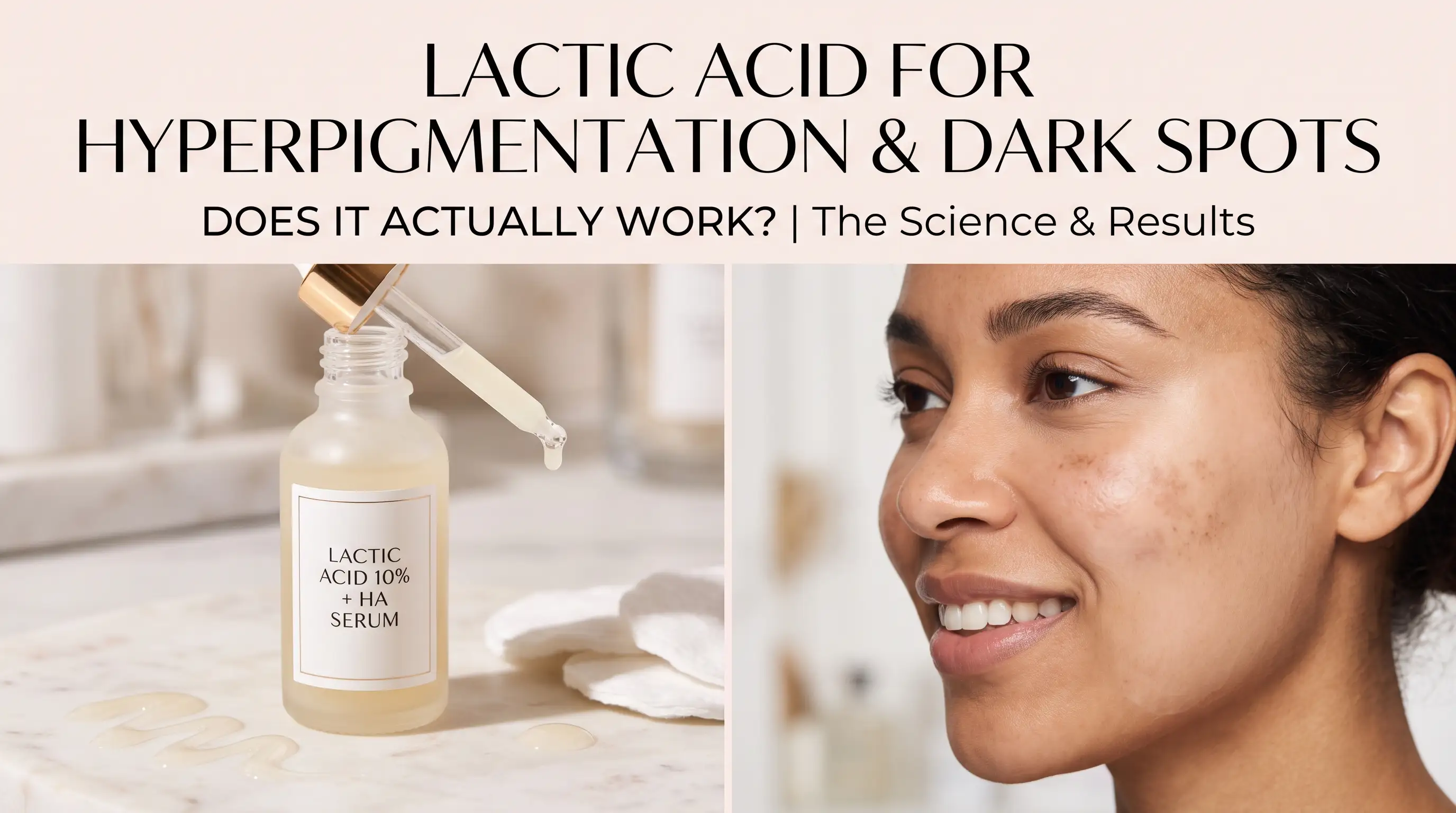
Lactic acid is often listed as a pigmentation-fighting ingredient, but the mechanism behind that claim is more specific — This guide explains exactly how lactic acid affects dark spots.
 Official
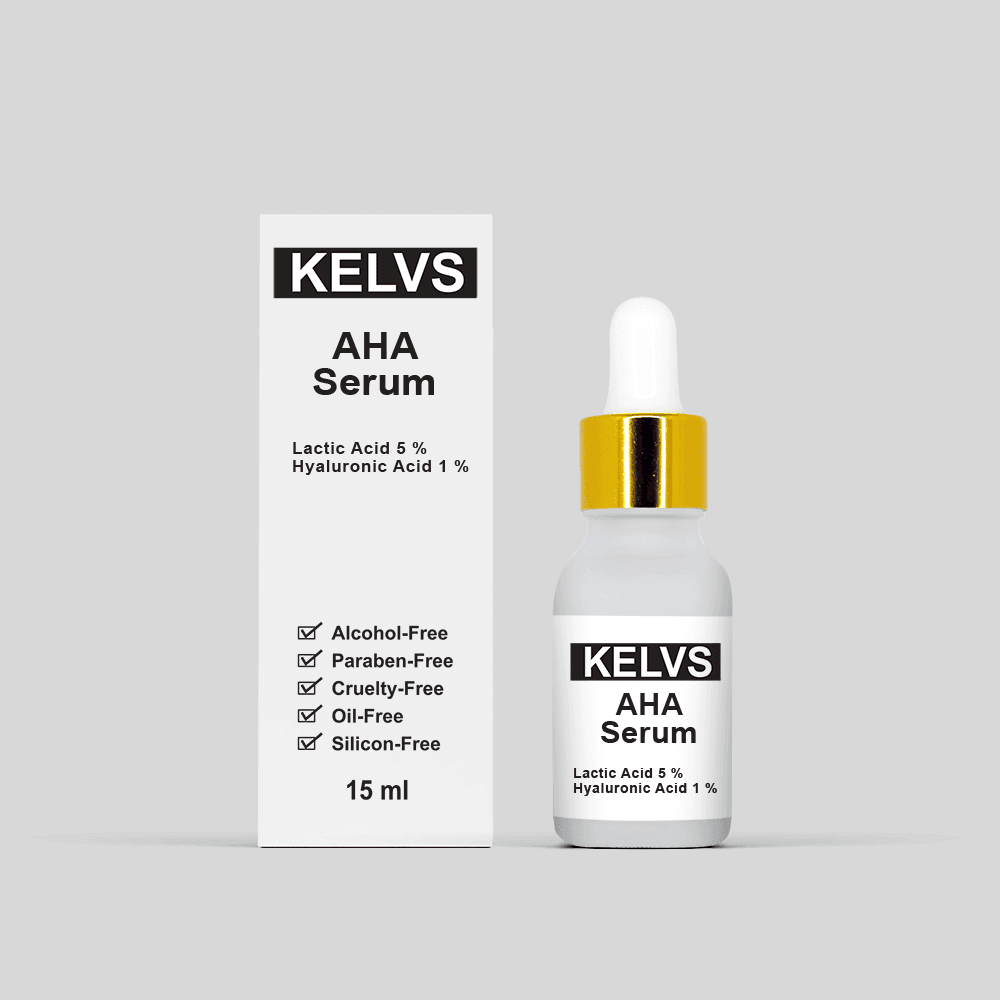
KELVS AHA Lactic Acid 5% Serum | Smooth Skin Texture & Even Tone
Scientifically formulated for maximum efficacy with zero harsh irritants. Restores skin balance, clears pores, and accelerates visible recovery.
Introduction
Lactic acid shows up on almost every list of ingredients recommended for dark spots and uneven skin tone, usually alongside vitamin C, alpha arbutin, and niacinamide. What's less often explained is exactly why it belongs on that list, and how much of the pigmentation-fading credit it actually deserves compared to ingredients built specifically for that job.
The short answer: lactic acid does contribute to fading dark spots, through two distinct mechanisms — surface exfoliation that clears pigmented cells faster, and a modest, directly measured inhibition of the enzyme that produces melanin. It is a genuinely useful supporting ingredient for hyperpigmentation, particularly post-acne marks and general dullness. It is not a substitute for a dedicated pigmentation-targeting active if deep or established dark spots are the main concern. This guide explains both mechanisms in detail and how lactic acid fits into a realistic pigmentation routine.
What Dark Spots and Hyperpigmentation Actually Are
Hyperpigmentation is the general term for any patch of skin darker than the surrounding area, and it's caused by melanocytes — the pigment-producing cells in the skin — overproducing melanin in response to a trigger. The most common triggers are sun exposure, inflammation from acne or irritation, and hormonal changes. Once that excess melanin is deposited into surrounding skin cells, it shows up as a dark spot or patch that can take months to fade on its own.
In Pakistan specifically, three drivers show up repeatedly: strong year-round sun exposure, a high rate of post-acne marks left behind after breakouts heal, and, for a meaningful number of people, rebound pigmentation after stopping harsh whitening or steroid-based creams. Understanding which of these is driving your pigmentation matters, because it affects how much a gentle ingredient like lactic acid can realistically help versus needing a more targeted approach.
How Lactic Acid Actually Affects Pigmentation
Mechanism One: Faster Surface Exfoliation
Lactic acid loosens the bonds between dead cells on the surface of the skin, causing them to shed faster than they would naturally. Since some of that surface layer contains pigmented cells — the visible part of a dark spot — clearing it faster means the spot fades sooner than it would through normal skin turnover alone. This is the larger and more straightforward part of lactic acid's pigmentation effect, and it applies to essentially any exfoliating acid, not just lactic acid specifically.
Mechanism Two: A Measured Effect on Melanin Production
What's more specific to lactic acid — and less commonly explained — is that it has also been shown to directly reduce melanin production, independent of exfoliation. A study published in Experimental Dermatology tested lactic acid and glycolic acid directly on melanoma cells and found that both inhibited melanin formation in a dose-dependent way by acting on tyrosinase activity — the enzyme responsible for converting precursor compounds into melanin — without affecting how the tyrosinase gene itself was expressed or how fast the cells grew. In plain terms: lactic acid appears to interfere with the enzyme doing the pigment-producing work, not just with the visible pigment already sitting on the surface.
This is a real and specific mechanism, but it's worth being accurate about scale — it is considerably more modest than the tyrosinase-inhibiting effect of dedicated depigmenting ingredients like alpha arbutin, and it should be treated as a supporting contribution rather than the main event.
What About Stronger, Professional-Strength Lactic Acid?
At the much higher concentrations used in clinical settings, lactic acid has shown more dramatic results specifically for melasma. A clinical study using pure 92% lactic acid as a chemical peel, applied by a dermatologist every three weeks, found marked improvement in melasma severity across all patients treated, based on the Melasma Area Severity Index (published research on lactic acid peels for melasma). This is a meaningful data point, but it describes a professional in-clinic procedure at a concentration nowhere near what's used in an at-home serum — it is not evidence that a 5% leave-on lactic acid product will produce the same result, and it should not be read that way.
What This Means in Practice
Put together, this gives a realistic and honest picture of where lactic acid fits in a pigmentation routine:
- Post-acne marks and general dullness: lactic acid is genuinely useful here. Faster cell turnover plus a modest tyrosinase-inhibiting effect makes a visible difference on the kind of surface-level, recently formed pigmentation that post-acne marks usually are.
- Established or deep dark spots: lactic acid can help at the margins, but it is not the primary tool for this. A dedicated pigmentation ingredient will do more of the work here.
- Melasma: at-home lactic acid is a supportive addition at best. The strong results seen in research involved a professional peel at a concentration far above anything sold as a cosmetic serum, and melasma in general responds best to a plan involving strict sun protection and, often, dermatologist guidance.
Lactic Acid Alongside Dedicated Pigmentation Ingredients
For most people dealing with dark spots, the more effective approach is not choosing lactic acid instead of a targeted brightening ingredient, but using it alongside one. Alpha arbutin works by inhibiting the same tyrosinase pathway far more directly, and niacinamide works by blocking pigment transfer to the skin's surface rather than production itself — meaning both can be combined with lactic acid's exfoliation-plus-mild-inhibition effect without the mechanisms competing with each other.
A practical way to think about it: lactic acid clears the surface faster and gives a small assist on melanin production; alpha arbutin and niacinamide do the heavier lifting on the pigmentation itself. For more detail on those two ingredients specifically, see What Is Alpha Arbutin? The Complete Skin Brightening Guide and Niacinamide for Dark Spots and Hyperpigmentation: Does It Really Work?. If your main concern is specifically post-acne marks, Does Alpha Arbutin Work for Post-Acne Dark Marks? is worth reading alongside this one.
If combining actives, keep them in separate steps rather than layering everything at once — for example, lactic acid a few evenings a week, with niacinamide or alpha arbutin used on the other days or at a different time of day, especially while you're still learning how your skin tolerates each ingredient.
Why Sunscreen Matters More Here Than Almost Anywhere Else
Sun exposure is one of the primary triggers for the melanin overproduction that causes dark spots in the first place, and exfoliating acids including lactic acid increase the skin's sensitivity to UV. That combination makes daily sunscreen non-negotiable in a pigmentation-focused routine — without it, new sun-triggered pigmentation can form at roughly the same pace that lactic acid and other actives are fading the old marks, meaning very little visible progress despite consistent product use. This is especially relevant in Pakistan's high year-round UV levels, where unprotected exposure during a pigmentation-focused routine can undo weeks of otherwise good progress.
How to Use Lactic Acid for Pigmentation Without Overdoing It
- Start at two to three times a week in the evening, on clean, dry skin, followed by a moisturiser
- Apply sunscreen every morning without exception, regardless of when the acid was used the night before
- Give it eight to twelve weeks before judging results — pigmentation fades gradually with any ingredient, and lactic acid is no exception
- Avoid layering it in the same session as other strong actives while establishing tolerance
The KELVS AHA Serum is formulated with 5% lactic acid alongside hyaluronic acid, designed to deliver meaningful surface exfoliation without the higher irritation risk that comes with stronger concentrations — a sensible starting point for pigmentation support that won't compromise the skin barrier in the process.
A Note on Post-Acne Marks Specifically
A large share of pigmentation concerns in Pakistan are post-inflammatory marks left behind after acne, rather than sun spots or melasma. For this specific type of pigmentation, preventing new breakouts matters as much as fading the marks that already exist — every new inflamed pimple is a chance for a fresh mark to form. If active acne is part of the picture, it's worth addressing that alongside any exfoliation routine; see Niacinamide for Acne-Prone Skin: Does It Work and How Fast? for a complementary approach that tackles both the breakouts and the resulting marks.
Conclusion
Lactic acid does contribute to fading dark spots and hyperpigmentation — through faster surface exfoliation and a real, if modest, direct effect on melanin-producing enzyme activity. What it isn't is a standalone solution for established or deep pigmentation, and the more dramatic results seen in clinical research involved professional-strength concentrations, not the leave-on serums most people actually use at home. Used consistently, at a sensible concentration, alongside daily sunscreen and — where appropriate — a more targeted ingredient like alpha arbutin or niacinamide, lactic acid earns a genuine place in a pigmentation routine. Used alone and expected to do all the work, it will likely disappoint.