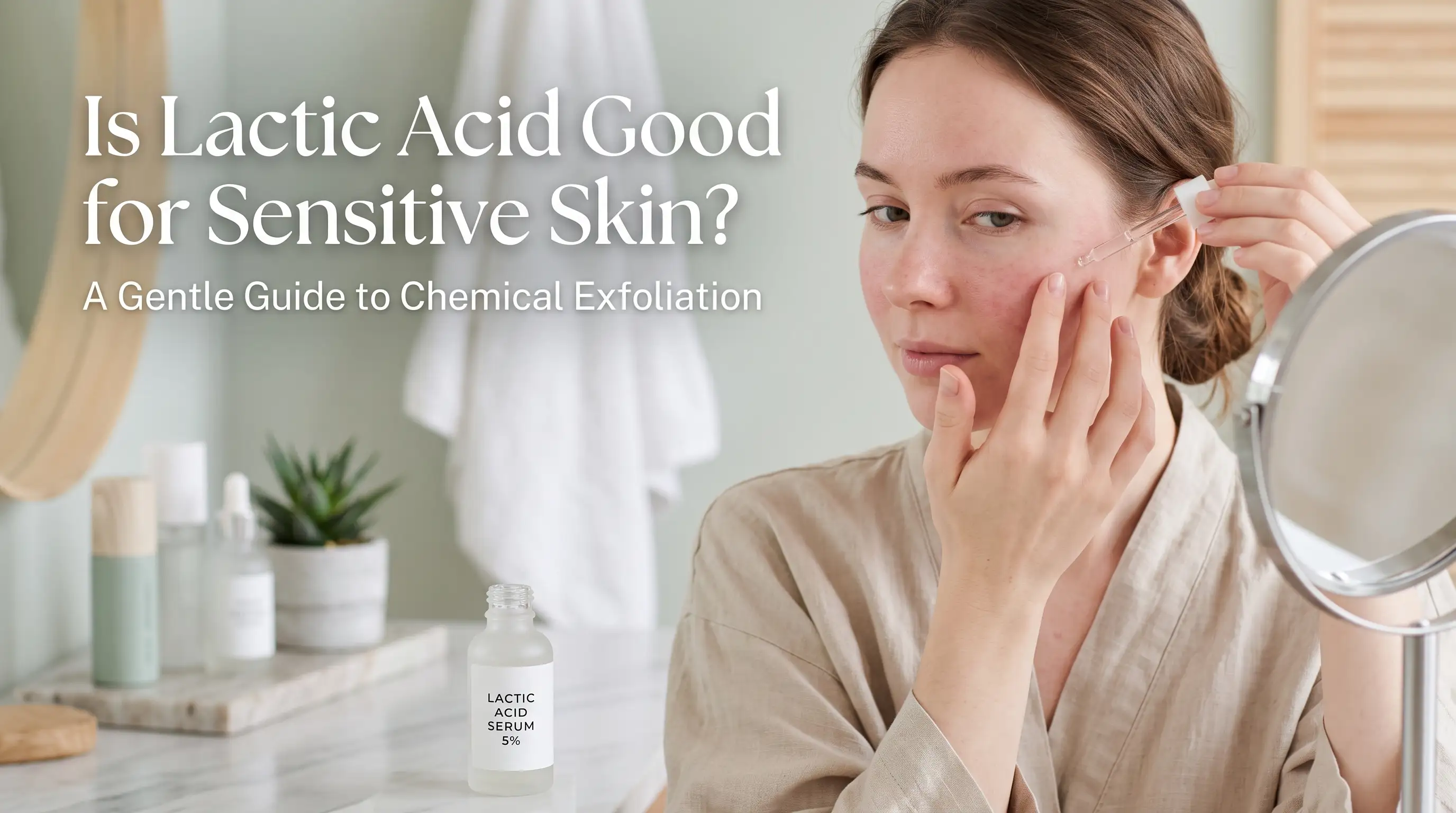
Can sensitive skin actually tolerate lactic acid? This guide looks at what the research says about lactic acid and sensitive skin, and how to introduce it without triggering irritation.
 Official
KELVS AHA Lactic Acid 5% Serum | Smooth Skin Texture & Even Tone
Scientifically formulated for maximum efficacy with zero harsh irritants. Restores skin balance, clears pores, and accelerates visible recovery.
Introduction
Sensitive skin and exfoliating acids have an uneasy relationship. Most people with reactive, easily irritated skin have learned to be cautious around anything labelled as "acid," often after a bad experience with a product that was too strong, too frequent, or simply not designed with sensitive skin in mind. So it's a fair question to ask before adding anything new to a routine: is lactic acid actually any different, or is it just another acid that happens to be marketed more gently?
The short answer: lactic acid is genuinely one of the more sensitive-skin-appropriate exfoliating acids available, for reasons that come down to its chemistry rather than just its reputation. That does not mean every lactic acid product is automatically safe for every sensitive skin type, or that it can be introduced carelessly. This guide explains what actually makes lactic acid different, what the research says, and how to introduce it in a way that respects how reactive skin behaves.
Why Lactic Acid Behaves Differently From Other AHAs
Not all alpha hydroxy acids are equally aggressive. Lactic acid has a larger molecular size than glycolic acid, the most common AHA it's usually compared against, which means it penetrates the skin more slowly and less deeply at an equivalent concentration. In practical terms, that translates into a milder exfoliating action and a lower likelihood of the stinging and redness that stronger AHAs are more prone to causing.
This isn't just a theoretical difference. A comparative study evaluating several alpha hydroxy acids, including lactic and glycolic acid, at equivalent concentrations found that the L(+) form of lactic acid was consistently less irritating than glycolic acid, while still producing comparable improvements in skin hydration and texture over time (International Journal of Cosmetic Science). That combination — meaningful results with a lower irritation profile — is exactly what makes lactic acid worth considering for skin that reacts easily.
The Barrier Connection: Why Lactic Acid Is Not Just "Gentler"
What makes lactic acid particularly relevant for sensitive skin isn't only that it's milder — it's that it interacts with the skin barrier differently than most other acids do. Lactic acid is chemically related to a component of the skin's own natural moisturising factor, and research has shown it can actually stimulate ceramide production in the skin. One study published in the Archives of Dermatological Research found that lactic acid increased keratinocyte ceramide synthesis and measurably improved stratum corneum barrier function, rather than simply exfoliating the surface and leaving the barrier to fend for itself.
A separate literature review on lactic acid's moisturising properties reached a similar conclusion, noting that lactic acid helps maintain epidermal barrier integrity during use, and specifically pointing to its suitability for sensitive skin types, including reactive, couperose-prone skin (International Journal of Dermatology). This is a meaningful distinction from acids that exfoliate at the expense of the barrier — lactic acid, used correctly, can support the barrier while it exfoliates, which is a large part of why it tends to be better tolerated over time.
So Does This Mean Any Lactic Acid Product Is Safe for Sensitive Skin?
No — and this is the part that's easy to miss. The research above describes lactic acid's general behaviour and mechanism, not a guarantee that applies to every product on the shelf regardless of concentration, pH, or what else is in the formula. A lactic acid serum at a high concentration and low pH, layered under three other active ingredients, can still irritate sensitive skin — the gentler chemistry of lactic acid does not cancel out poor formulation or poor routine habits.
Individual tolerance also genuinely varies. Some sensitive skin will do well with lactic acid from the first use; other sensitive skin — particularly if the barrier is already compromised from harsh products, over-cleansing, or a reactive flare-up — will still need a slower, more cautious introduction, or may need to wait until the barrier has recovered before introducing any exfoliating acid at all. If your skin is currently reactive or recovering from harsh whitening or steroid-based products, it's worth reading How to Repair Your Skin Barrier After Whitening Cream Damage before introducing lactic acid or any other active.
What a Sensitive-Skin-Appropriate Lactic Acid Product Should Look Like
Given everything above, the practical checklist for choosing a lactic acid product for sensitive skin comes down to a few things: a moderate concentration rather than the highest available, a formulation that pairs the acid with hydrating or barrier-supporting ingredients rather than stacking it with other strong actives, and clear guidance on how to introduce it gradually.
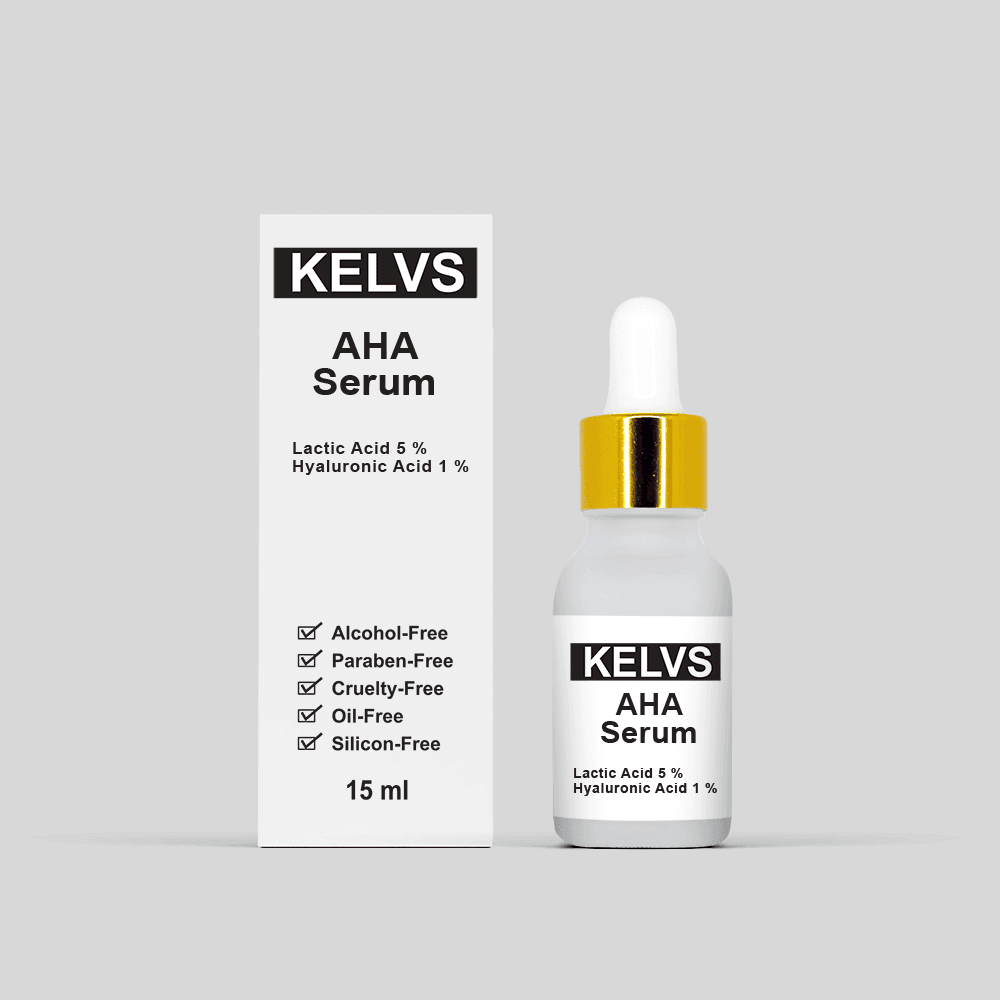
This is the thinking behind the KELVS AHA Serum, formulated at 5% lactic acid alongside 1% hyaluronic acid. Five percent is enough to deliver meaningful surface exfoliation and support the texture and tone benefits lactic acid is known for, without reaching for a higher, more aggressive strength that offers diminishing returns alongside a much higher irritation risk. The added hyaluronic acid is there specifically to support hydration while the acid is doing its work, which matters more for sensitive skin than for skin that already tolerates exfoliation easily.
How to Introduce Lactic Acid If You Have Sensitive Skin
Even with a well-formulated, moderate-strength product, sensitive skin benefits from a slower start than the general population.
- Patch test first. Apply a small amount to the inner forearm for several consecutive days before using it on your face.
- Start at once a week. Not two or three times — once, for the first two weeks, applied to clean, dry skin in the evening.
- Always follow with a moisturiser. This supports the barrier while the acid is exfoliating, and is not a step to skip on sensitive skin.
- Watch for the difference between mild tingling and true irritation. A brief, mild tingling sensation on application is common and not a cause for concern. Persistent redness, tightness, or stinging the next day is a sign to slow down further, not push through.
- Keep the rest of the routine simple. Avoid introducing lactic acid in the same week as any other new active ingredient, so you can clearly tell what your skin is reacting to if anything happens.
- Increase gradually, if at all. Some sensitive skin does well settling permanently at once or twice a week — there's no requirement to work up to daily use.
Sunscreen deserves its own mention here: exfoliating acids increase the skin's sensitivity to the sun, and this applies to lactic acid as much as any other AHA. Daily sunscreen is non-negotiable for as long as lactic acid is part of your routine, regardless of how sensitive or resilient your skin is.
Who Should Be More Cautious, or Wait
Lactic acid being relatively gentle as far as AHAs go does not mean it is the right first step for every sensitive skin situation. If your skin is currently in an active reactive state — visibly inflamed, burning, or recovering from a harsh product reaction — introducing any exfoliating acid, lactic acid included, is likely to add stress to a barrier that needs to stabilise first. In that situation, a simpler routine focused on gentle cleansing and barrier support is the more appropriate starting point; see Minimalist Skincare Routine for Sensitive Skin in Pakistan for a practical starting framework. Once the skin has settled and stabilised, lactic acid is a reasonable next step to reintroduce gently.
Conclusion
Lactic acid is not automatically safe for every sensitive skin type, but it is genuinely one of the better-suited exfoliating acids for reactive skin, both in its lower irritation profile compared to other AHAs and in its documented ability to support the skin barrier rather than simply strip it. The research backs this up specifically, rather than it being a marketing assumption. What still matters, regardless of the ingredient's reputation, is the concentration, the formulation, and how gradually it's introduced. Done carefully — a moderate strength, a slow start, a supportive moisturiser, and daily sunscreen — lactic acid is a reasonable and evidence-backed option for sensitive skin looking to exfoliate without the reaction that stronger acids tend to cause.